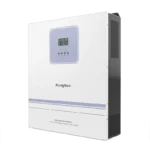
An inverter’s IP rating helps describe its enclosure protection, but selecting an installation location requires more than comparing two digits. Water exposure, dust, heat, ventilation, cable entries and service access all influence the decision. Use IP21, IP54 and IP66 as part of a documented location review, then follow the instructions for the exact inverter. A higher number does not turn every wall, roof or cabinet into a suitable installation site.
Read each digit as a separate protection question
The IP code distinguishes protection related to solid objects and access from protection against water ingress. It is not a combined quality score. In the ratings discussed here, the first digit changes from 2 to 5 to 6, while the second changes from 1 to 4 to 6. Each addresses a defined type of exposure rather than a promise that the equipment withstands every environmental hazard.
The IEC 60529 publication identifies the standard for classifying protection provided by electrical equipment enclosures. For equipment selection, turn the code into specific questions about the proposed site instead of using “indoor” and “outdoor” as the only categories.
Compare IP21, IP54 and IP66 carefully
| Rating | Solid-object or dust aspect | Water aspect | Location question |
|---|---|---|---|
| IP21 | Protection associated with objects of 12.5 mm and greater and specified access protection | Vertically falling water drops under the test conditions | Is this a clean, controlled location allowed by the manual? |
| IP54 | Dust protected; not the same as dust-tight | Splashing water under the test conditions | Could the site experience jets, heavy deposits or other unsupported exposure? |
| IP66 | Dust-tight enclosure classification | Powerful water jets under the test conditions | Are temperature, sunlight, mounting and cable-entry requirements also satisfied? |
Intertek’s IEC 60529 testing overview provides a useful reference for these individual protection categories. The rating concerns defined enclosure tests. It should not be read as permission to pressure-wash an installed inverter, immerse it, expose it to corrosive chemicals or disregard the manufacturer’s mounting instructions.
Describe the actual water exposure
A utility room, sheltered veranda and open external wall can present very different conditions. Record possible wind-driven rain, roof leaks, runoff, cleaning practices, irrigation spray and flood risk. A location that normally looks dry may receive water when someone washes the floor or when a nearby drain blocks. The review should cover foreseeable use and maintenance, not just the weather on the survey day.
Separate splash and jet exposure from immersion. An IP66 declaration does not by itself establish an immersion rating. Nor does an overhead cover automatically solve water movement around cables or the mounting surface. Ask the installer how the complete installation will meet the manual and local requirements, including the placement of isolators, connectors and associated equipment.
Assess dust by source and maintenance burden
Ordinary household dust differs from dust generated by woodworking, grinding, grain handling or heavy traffic. Identify the source, likely concentration and whether material can build up on ventilation paths or heat-transfer surfaces. Some environments require specialist assessment beyond a general enclosure rating. A classification against ingress is not a statement that a location is appropriate for combustible dust or explosive atmospheres.
Plan how the site will remain clean enough for reliable operation. If access requires moving stock, climbing over machinery or removing another cabinet, routine inspection may be neglected. Maintenance instructions should come from the manufacturer. Do not improvise cleaning methods that could damage seals, force water into connections or expose people to energized components.
Make a separate thermal assessment
A well-protected enclosure still has an operating-temperature range and heat-management requirements. Check the installation’s expected ambient temperature, direct sunlight, proximity to other heat sources and required clearances. A shaded exterior wall can be thermally different from a sunlit metal cabinet even when both seem equally protected from rain. Use the selected inverter’s derating information where available.
Enclosing an inverter inside an additional box may change its thermal environment and maintenance access. The outer box does not automatically upgrade the equipment inside into a manufacturer-approved outdoor system. Ask for an approved arrangement and a thermal review. Buyers should resist accepting an unspecified cabinet as a substitute for a documented installation solution.
Protect the rating at installation interfaces
Look beyond the front cover. Cable glands, unused openings, connector caps, covers and mounting orientation can affect the enclosure’s installed condition. The supplier should identify which accessories are included and which must be selected by the installer. A product photograph cannot verify whether the correct entry hardware has been supplied for the actual cable sizes and routing.
Installation work should follow the manufacturer’s instructions and be carried out by qualified personnel. This planning guide does not provide steps for opening an inverter or modifying its seals. If the proposed installation requires drilling extra openings, replacing glands or changing covers, obtain explicit approval rather than assuming the original IP declaration still describes the modified assembly.
Evaluate accessibility alongside protection
Choose a location where authorized personnel can read the display, inspect the equipment and reach the required isolation arrangements safely. Consider door swing, nearby storage, accidental impact and the movement of vehicles or tools. Protection from ingress does not describe mechanical impact resistance, fire separation, emergency access or suitability for a particular escape route.
Noise can also influence location selection. A technically permitted mounting point may be inconvenient beside a quiet workspace or sleeping area. Request the applicable acoustic information and review the site layout. Moving the inverter to improve noise conditions must not create new temperature, moisture or cable-routing problems elsewhere.
Use Techfine series as starting points, not blanket approvals
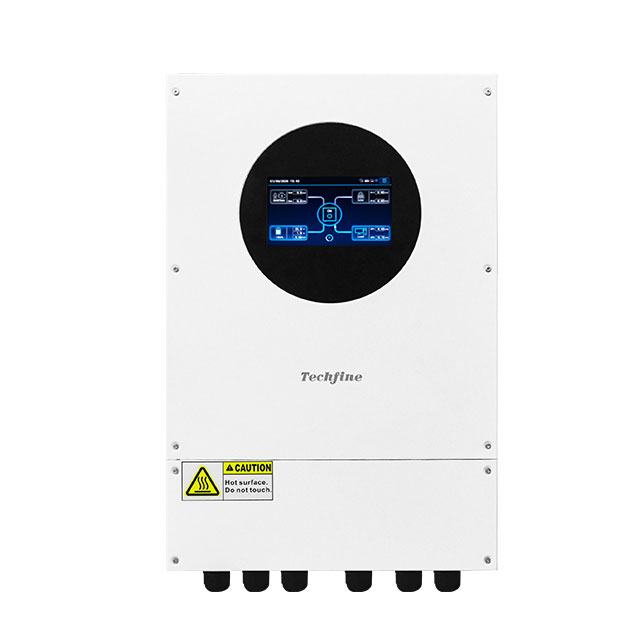
Techfine identifies the TD series with an IP54 enclosure and the XA series with an IP66 enclosure. These distinctions can narrow the product discussion, but the final choice still needs the exact model documentation and a site assessment. Do not infer the rating of another family from a similar-looking cabinet.
Begin a detailed product comparison at the Techfine XA series page. Provide photographs or a drawing of the intended location, exposure conditions, expected temperatures and service-access constraints. Ask the supplier to confirm the model’s installation requirements and required entry accessories in writing.
A useful location approval record
Keep a short record identifying the model, manual revision, selected mounting position and environmental assumptions. Include water and dust exposure, expected temperature, clearances, cable-entry arrangement and the person responsible for maintenance. Mark unresolved items before purchase. This is more useful than a quotation containing only the phrase “weatherproof inverter.”
Revisit that record if the surroundings change. A new washing area, nearby extraction outlet or storage enclosure can alter the environment after commissioning. The IP label on the inverter may remain unchanged while the installation conditions become less suitable. Clear documentation makes that change easier to recognize.
Frequently asked questions
Is IP66 automatically suitable anywhere outdoors?
No. Review the manufacturer’s permitted location, temperature, sunlight, mounting and connection requirements, along with the project’s environmental and electrical requirements.
Can an IP21 inverter be installed under a simple rain cover?
A cover alone does not establish suitability. The complete location must satisfy the selected model’s instructions; exposure can include wind, condensation and water paths that a small roof does not address.
Does IP54 mean dust cannot enter?
No. Dust-protected and dust-tight are different classifications. Choose equipment and a maintenance plan appropriate to the actual environment.