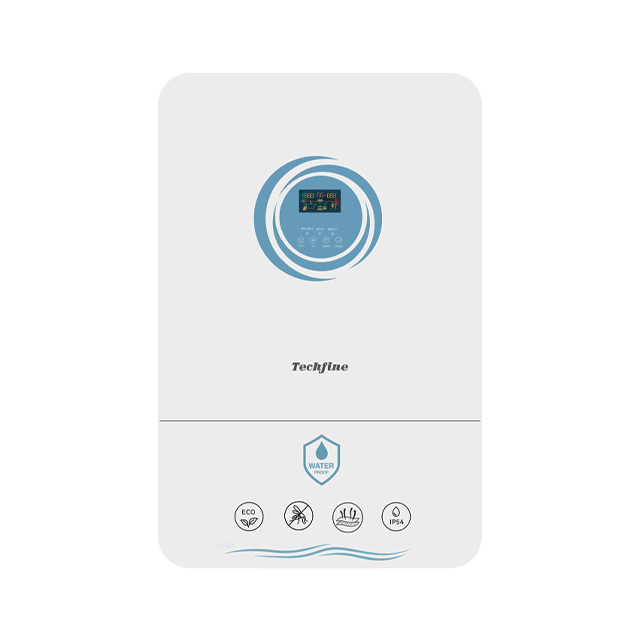
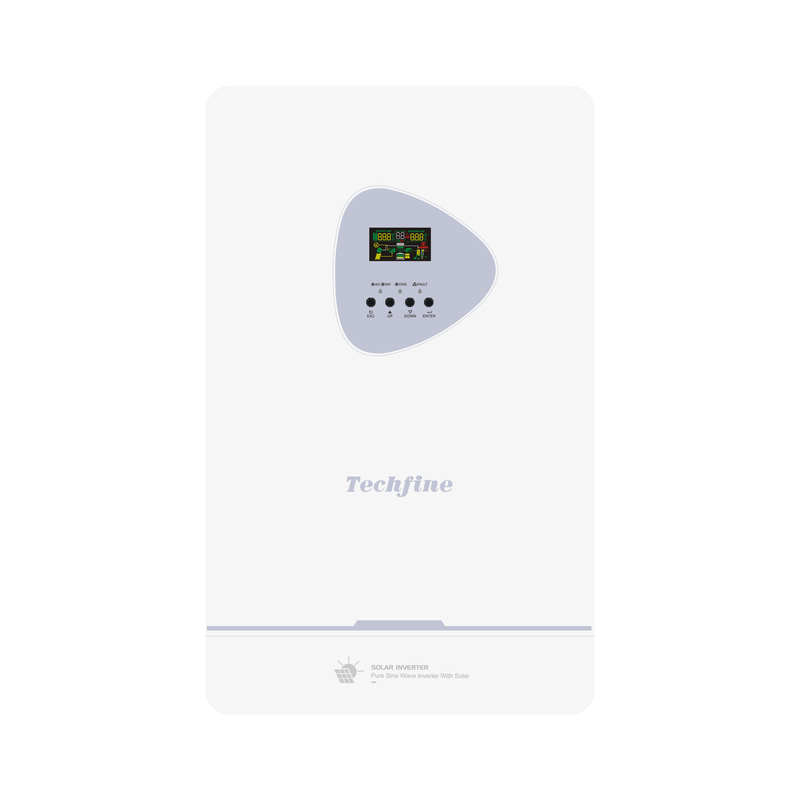
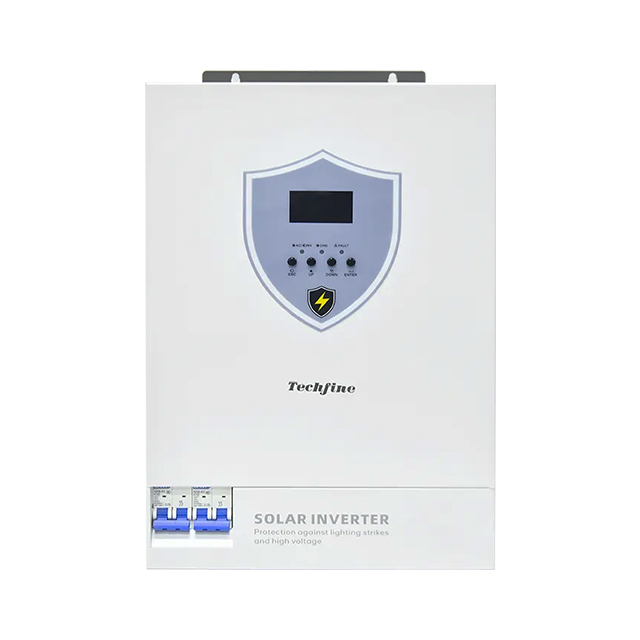
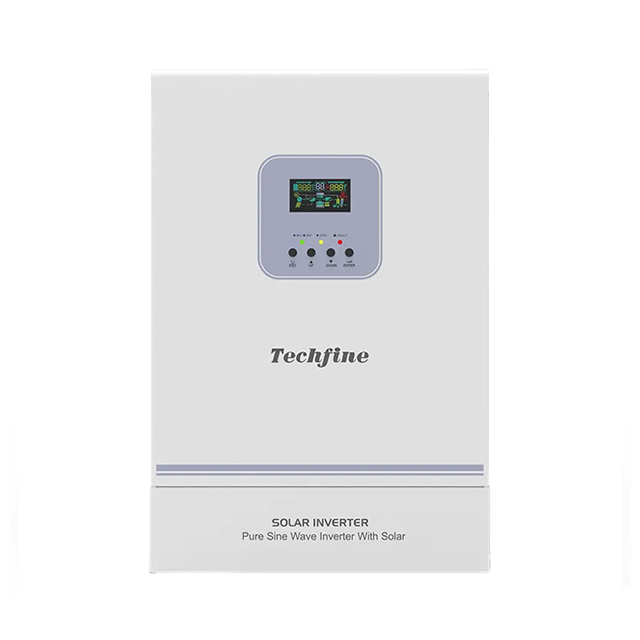
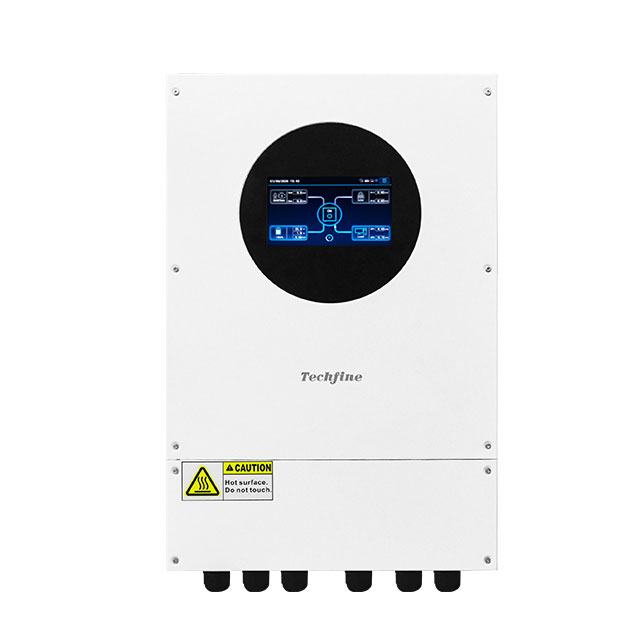
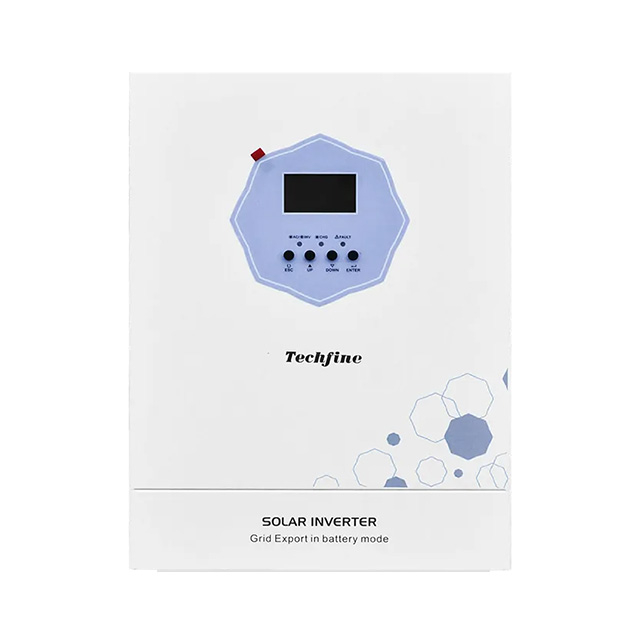
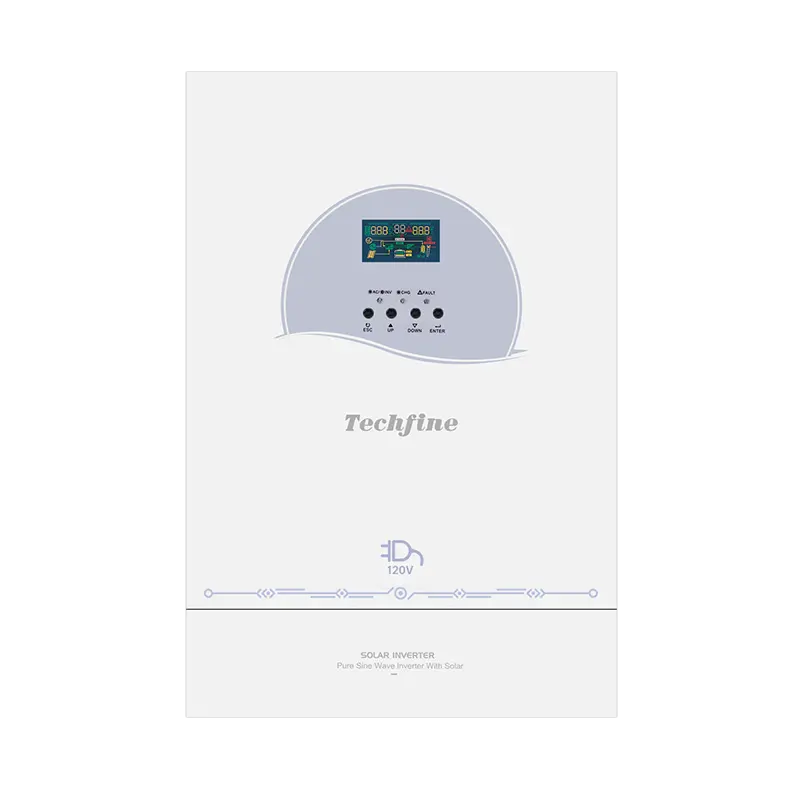
Hybrid Solar Inverters
Explore Hybrid Solar Inverters
Compare high-frequency hybrid inverter platforms for solar charging, battery storage and AC loads. Match the AC voltage, battery platform and PV inputs to the selected model.
Compare the platforms below, then open the relevant series for the model table and configuration checklist. Techfine Group can help clarify the model and supply requirements for your enquiry.


Parameter | TD3024 | TD3624 (custom) | TD4024 | TD5548 (custom) | TD6248 | TD8648 (custom) | TD11048
Input wiring | L+N+PE
Parameter | EA2012 | EA3024 | EA3624 (custom) | EA4024 | EA5548 (custom) | EA6248 | EA8048 | EA8648 (custom) | EA11048
Input wiring | L+N+PE
Parameter | BH3024 | BH3624 | BH5548 | BH6248 | BH11048
Input wiring | L+N+PE
Parameter | IV3024 | IV3624 | IV5548 | IV6248
Input wiring | L+N+PE
Parameter | GA PRO 3024 | GA PRO 3624 (custom) | GA PRO 4024 | GA PRO 5548 (custom) | GA PRO 6248 | GA PRO 8648 (custom) | GA PRO 11048
Input wiring | L+N+PE
Dual on/off-grid modes support battery-free operation. Enables energy storage and grid feed-in under SUE/PEC modes, with dual AC inputs and automatic switching.
CT-based reverse current detection intelligently controls power flow, prioritizes self-use, prevents grid backfeed, and complies with energy regulations.
Supports on-grid, off-grid, and hybrid modes. Enables battery-free operation and flexible adaptation to different scenarios. Battery power selling modes (SUF & PEC) support both energy storage and grid feed-in.
Adopts silicon carbide (SiC) devices for higher efficiency, lower thermal loss, and reduced self-consumption. Ensures stable long-term operation with minimal overheating, noise, and failure rates.
Parameter | GA PRO S 4024 | GA PRO S 5548
Input wiring | L+N+PE
Parameter | TQ2012 | TQ3624 | TQ6248 | TQ12048
Input wiring | L+N+PE
Lithium Battery Auto-restart Function, More Convenient for Lithium Battery Charging
Intelligent Power Supply Mode, Intelligent Distribution of Solar Panel/Mains/Battery Power Shares
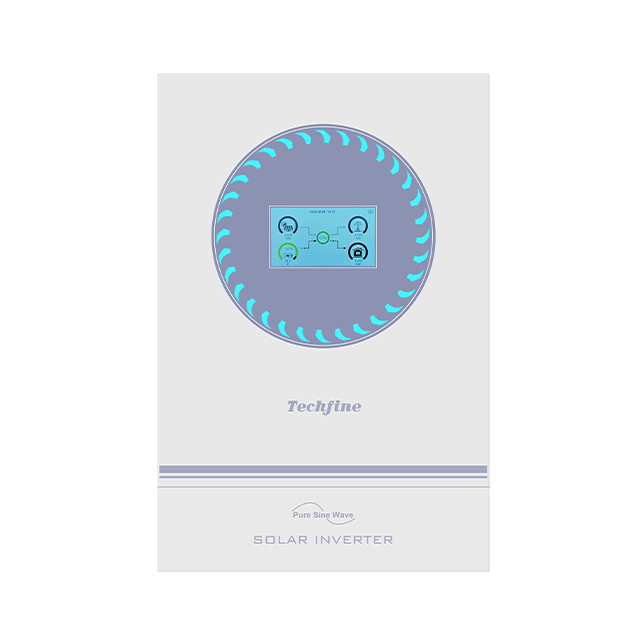
Touch screen display, status is clear at a glance
Adapt to various load conditions
Applications and Selection
Electrical Configuration
Use the Hybrid Solar Inverters electrical limits as the starting point for system design. Confirm the AC supply where applicable, battery voltage, PV string limits and equipment connected to the output. Optional functions must be specified with the order.
Installation Conditions
Check the battery and charging requirements for the selected Hybrid Solar Inverters model. Match permitted charge and discharge current, charging profile and any supported BMS protocol. A matching connector or nominal voltage alone does not confirm compatibility. For a battery-free or DC-only product, use only the interfaces listed in its model table.
Operating Requirements
Install the Hybrid Solar Inverters product within the temperature, ventilation and enclosure conditions stated in its manual. Specify cable sizes, isolation and protection through a qualified installation design. Product dimensions and clearances should be checked before cabinet or mounting work.
Check which monitoring ports and communication options are included on the selected Hybrid Solar Inverters model. Confirm accessory hardware, protocol and firmware before relying on remote monitoring, battery communication or expansion.
Applications and Selection
Frequently Asked Questions
Compare high-frequency hybrid inverter platforms for solar charging, battery storage and AC loads. Match the AC voltage, battery platform and PV inputs to the selected model. Compare the exact model specifications and the interfaces needed by your system.
No. Accessories, firmware functions and supported expansion depend on the exact model and agreed supply configuration.
Use the enclosure rating, temperature limits and installation instructions for the selected model. Do not assume every product in a category has the same protection rating.
Request the matching model data sheet and manual. Where market compliance evidence is needed, confirm that it covers the exact model and configuration.
Provide the model or application, electrical requirements, destination market, quantity and any branding or packaging requirements.
Confirm expansion support before ordering. Compatibility depends on the equipment, firmware, wiring and battery arrangement; a similar series name alone is not sufficient.