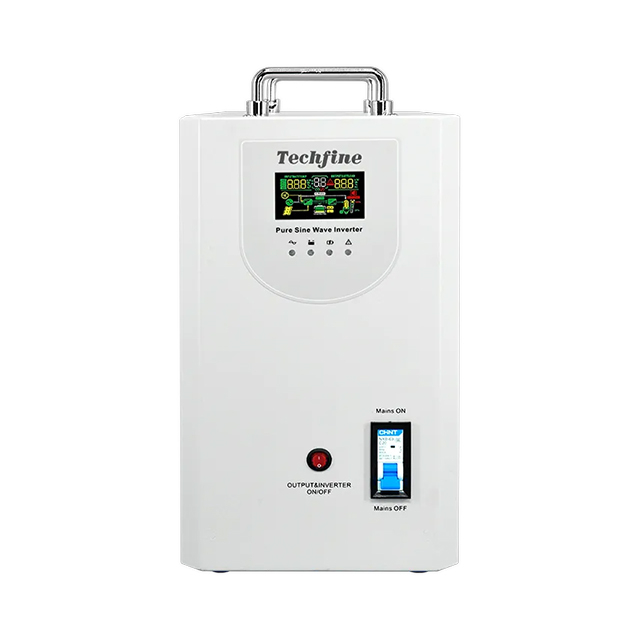
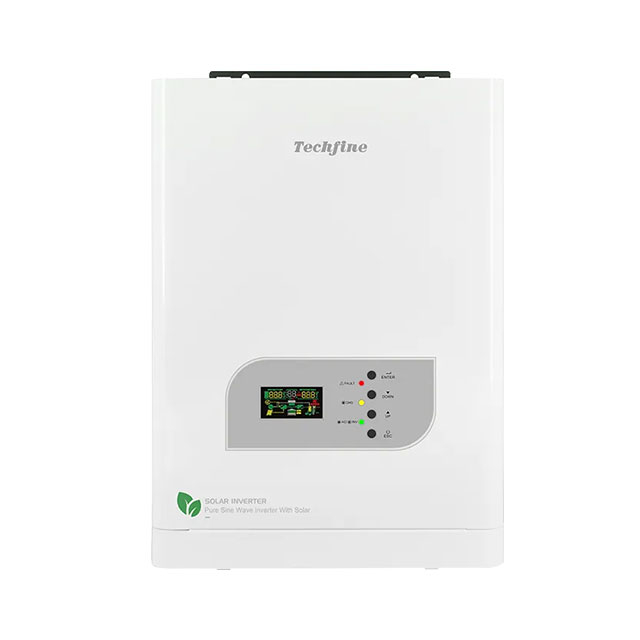
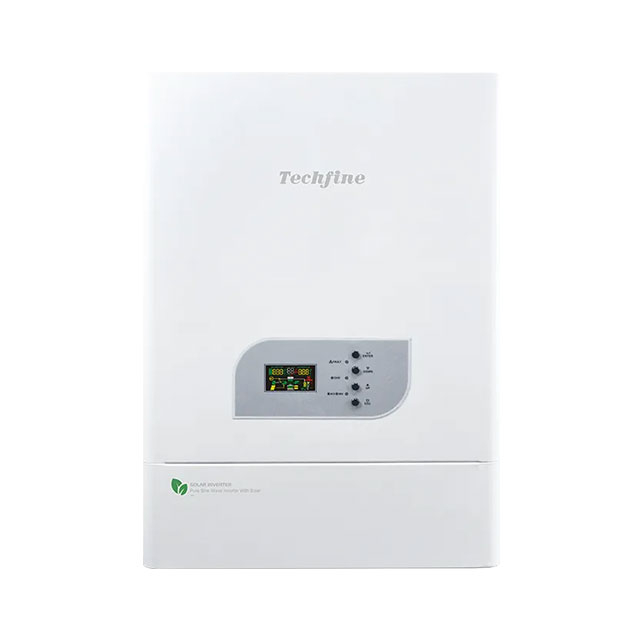
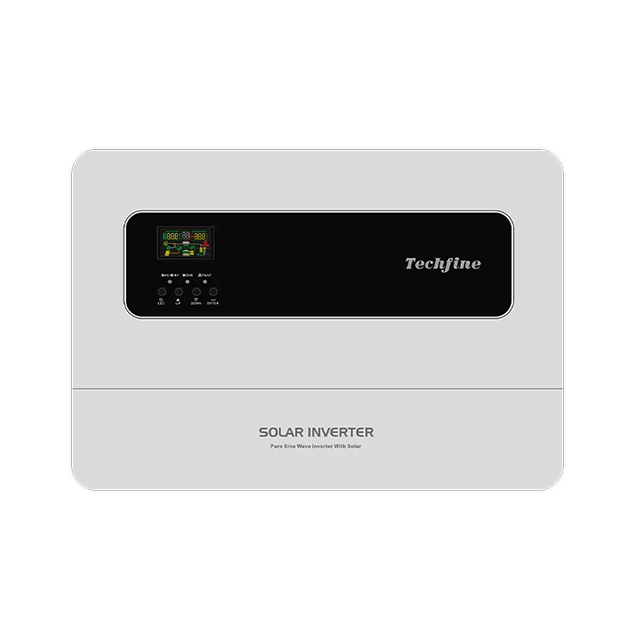
HB Series Off-Grid Inverter
HB Series Low-Frequency Inverter 400-8000 W
Parameter | HB0512 | HB0812 | HB1012 | HB1512 | HB1524 | HB2024 | HB2524 | HB3024 | HB3048 | HB5024 | HB5048 | HB6048 | HB8048 | HB10048
Power input | 220 VAC (standard) / 110 VAC (custom)
Input voltage range | 220 V model: 145-275 VAC ±3 V; 110 V model: 73-137 VAC ±3 V | 220 V model: 154-264 VAC ±3 V (normal) / 185-264 VAC ±3 V (UPS); 110 V model: 77-132 VAC ±3 V (normal) / 92-132 VAC ±3 V (UPS). UPS mode is set via the DIP switch on the rear panel
The HB series belongs to the off-grid solar inverters range. Review the exact model in the specification table rather than selecting on the series name alone.
Parameter | HB0512 | HB0812 | HB1012 | HB1512 | HB1524 | HB2024 | HB2524 | HB3024 | HB3048 | HB5024 | HB5048 | HB6048 | HB8048 | HB10048 Power input | 220 VAC (standard) / 110 VAC (custom)
Structural Features
Key features of the HB platform:
- Parameter | HB0512 | HB0812 | HB1012 | HB1512 | HB1524 | HB2024 | HB2524 | HB3024 | HB3048 | HB5024 | HB5048 | HB6048 | HB8048 | HB10048
- Power input | 220 VAC (standard) / 110 VAC (custom)
- Input voltage range | 220 V model: 145-275 VAC ±3 V; 110 V model: 73-137 VAC ±3 V | 220 V model: 154-264 VAC ±3 V (normal) / 185-264 VAC ±3 V (UPS); 110 V model: 77-132 VAC ±3 V (normal) / 92-132 VAC ±3 V (UPS). UPS mode is set via the DIP switch on the rear panel
- Input frequency | 50/60Hz±5%
- Rated output power | 400W | 640W | 800W | 1200W | 1600W | 2400W | 4000W | 4800W | 6400W | 8000W
Product Advantages
Parameter | HB0512 | HB0812 | HB1012 | HB1512 | HB1524 | HB2024 | HB2524 | HB3024 | HB3048 | HB5024 | HB5048 | HB6048 | HB8048 | HB10048
Power input | 220 VAC (standard) / 110 VAC (custom)
Input voltage range | 220 V model: 145-275 VAC ±3 V; 110 V model: 73-137 VAC ±3 V | 220 V model: 154-264 VAC ±3 V (normal) / 185-264 VAC ±3 V (UPS); 110 V model: 77-132 VAC ±3 V (normal) / 92-132 VAC ±3 V (UPS). UPS mode is set via the DIP switch on the rear panel
Input frequency | 50/60Hz±5%
Rated output power | 400W | 640W | 800W | 1200W | 1600W | 2400W | 4000W | 4800W | 6400W | 8000W
For a HB quotation, send the exact model, quantity, destination market, electrical requirements and expected operating duty. Identify any branding, packaging or documentation requirements separately so the supplied configuration is clear.
Technical Parameters
| Parameter | HB0512 | HB0812 | HB1012 | HB1512 | HB1524 | HB2024 | HB2524 | HB3024 | HB3048 | HB5024 | HB5048 | HB6048 | HB8048 | HB10048 |
|---|---|---|---|---|---|---|---|---|---|---|---|---|---|---|
| Power input | 220 VAC (standard) / 110 VAC (custom) | |||||||||||||
| Input voltage range | 220 V model: 145-275 VAC ±3 V; 110 V model: 73-137 VAC ±3 V | 220 V model: 154-264 VAC ±3 V (normal) / 185-264 VAC ±3 V (UPS); 110 V model: 77-132 VAC ±3 V (normal) / 92-132 VAC ±3 V (UPS). UPS mode is set via the DIP switch on the rear panel | ||||||||||||
| Input frequency | 50/60Hz±5% | |||||||||||||
| Rated output power | 400W | 640W | 800W | 1200W | 1600W | 2400W | 4000W | 4800W | 6400W | 8000W | ||||
| Output voltage (utility mode) | AVR stabilized: 220 V model 220 VAC ±10%; 110 V model 110 VAC ±10% | Same as input voltage (bypass) | ||||||||||||
| Output frequency (utility mode) | Same as input frequency (bypass) | |||||||||||||
| Output voltage (inverter mode) | 220VAC±10%(110VAC±10%) | |||||||||||||
| Output frequency (inverter mode) | 50 or 60 Hz ±1% | |||||||||||||
| Output waveform (inverter mode) | Sine wave | |||||||||||||
| Battery type | External lead-acid, flooded or lithium battery | |||||||||||||
| Battery voltage | 12VDC | 24VDC | 48VDC | 24VDC | 48VDC | |||||||||
| Battery charge voltage | 13.75DC | 13.75VDC | 27VDC | 54VDC | 27VDC | 54VDC | ||||||||
| Max. AC charging current | 8A | 13A | 18A | 30 | 15A | 20A | 30A | 15A | 43A | 22A | 28A | 46A | 56A | |
| Transfer time | ≤10ms | |||||||||||||
| Peak load ratio | 3:1 (max.) | |||||||||||||
| Transformer | Toroidal transformer | 1 toroidal transformer | 2 toroidal transformers | |||||||||||
| Standby power (W) | 6W | 8W | 9W | 11W | 12W | 15W | 16W | 20W | 23W | 24W | 26W | 32 W (2.5 W energy-saving mode) | ||
| Protection (utility mode) | Utility mode: input over-current protection via circuit breaker | Utility mode: input over-current protection via air circuit breaker | ||||||||||||
| Protection (inverter mode) | Inverter mode: overload, short-circuit, low-voltage protection (battery reverse-polarity fuse) | Inverter mode: overload, short-circuit, low-voltage and battery reverse-polarity protection | ||||||||||||
| Display | — | Dot-matrix LCD with LED indicators | ||||||||||||
| Display mode | Standard version has no keys (specify keys at order). Paging key scrolls AC voltage/frequency, output voltage/frequency, battery voltage, load current, etc. | |||||||||||||
| Audible alarm | Continuous beep at battery low-voltage protection | |||||||||||||
| Audible alarm | One beep per second at battery low voltage | |||||||||||||
| Audible alarm | Continuous beep at overload | |||||||||||||
| Audible alarm | Overload <130%: beep 1/s, output off after 30 s; >150%: output off after 300 ms | |||||||||||||
| Audible alarm | Continuous beep at machine fault | |||||||||||||
| Operating temperature | 0 to 40 °C | |||||||||||||
| Storage temperature | -15 to 45 °C | |||||||||||||
| Relative humidity | -10 to 90 °C, non-condensing | |||||||||||||
| Noise level | <45 dB | |||||||||||||
| Dimensions L×W×H (mm) | 300×144×213 | 385×190×382 | 552×190×382 | |||||||||||
| Carton dimensions L×W×H (mm) | 390×225×318 | 470×260×420 | 625×265×382 | |||||||||||
| Net weight / gross weight | 7.5 kg (gross 8.5 kg) | 7.9 kg (gross 9.0 kg) | 7.8 kg (gross 8.3 kg) | 9.1 kg (gross 9.7 kg) | 15.4 kg (gross 16.4 kg) | 15.6 kg (gross 16.6 kg) | 17.9 kg (gross 18.9 kg) | 21.3 kg (gross 23.6 kg) | 22 kg (gross 25 kg) | 24 kg (gross 27 kg) | 32.5 kg (gross 35.1 kg) | 36.1 kg (gross 39.5 kg) | ||
Use the HB electrical limits as the starting point for system design. Confirm the AC supply where applicable, battery voltage, PV string limits and equipment connected to the output. Optional functions must be specified with the order.
Check the battery and charging requirements for the selected HB model. Match permitted charge and discharge current, charging profile and any supported BMS protocol. A matching connector or nominal voltage alone does not confirm compatibility. For a battery-free or DC-only product, use only the interfaces listed in its model table.
For a HB quotation, send the exact model, quantity, destination market, electrical requirements and expected operating duty. Identify any branding, packaging or documentation requirements separately so the supplied configuration is clear.
The table describes one published model revision. Confirm the current supply configuration before ordering.
Before You Order
Use the HB electrical limits as the starting point for system design. Confirm the AC supply where applicable, battery voltage, PV string limits and equipment connected to the output. Optional functions must be specified with the order.
Electrical Match
Check the battery and charging requirements for the selected HB model. Match permitted charge and discharge current, charging profile and any supported BMS protocol. A matching connector or nominal voltage alone does not confirm compatibility. For a battery-free or DC-only product, use only the interfaces listed in its model table.
Installation Plan
Install the HB product within the temperature, ventilation and enclosure conditions stated in its manual. Specify cable sizes, isolation and protection through a qualified installation design. Product dimensions and clearances should be checked before cabinet or mounting work.
Supply Configuration
HB Series — Selection and Application
The HB series belongs to the off-grid solar inverters range. Review the exact model in the specification table rather than selecting on the series name alone.
Parameter | HB0512 | HB0812 | HB1012 | HB1512 | HB1524 | HB2024 | HB2524 | HB3024 | HB3048 | HB5024 | HB5048 | HB6048 | HB8048 | HB10048 Power input | 220 VAC (standard) / 110 VAC (custom)
Model selection
For HB, first identify the required electrical interface and continuous load.
Parameter | HB0512 | HB0812 | HB1012 | HB1512 | HB1524 | HB2024 | HB2524 | HB3024 | HB3048 | HB5024 | HB5048 | HB6048 | HB8048 | HB10048 Power input | 220 VAC (standard) / 110 VAC (custom)
Operating features
Parameter | HB0512 | HB0812 | HB1012 | HB1512 | HB1524 | HB2024 | HB2524 | HB3024 | HB3048 | HB5024 | HB5048 | HB6048 | HB8048 | HB10048
Power input | 220 VAC (standard) / 110 VAC (custom)
Input voltage range | 220 V model: 145-275 VAC ±3 V; 110 V model: 73-137 VAC ±3 V | 220 V model: 154-264 VAC ±3 V (normal) / 185-264 VAC ±3 V (UPS); 110 V model: 77-132 VAC ±3 V (normal) / 92-132 VAC ±3 V (UPS). UPS mode is set via the DIP switch on the rear panel
Input frequency | 50/60Hz±5%
Rated output power | 400W | 640W | 800W | 1200W | 1600W | 2400W | 4000W | 4800W | 6400W | 8000W
System integration
Use the HB electrical limits as the starting point for system design. Confirm the AC supply where applicable, battery voltage, PV string limits and equipment connected to the output. Optional functions must be specified with the order.
Battery and charging
Check the battery and charging requirements for the selected HB model. Match permitted charge and discharge current, charging profile and any supported BMS protocol. A matching connector or nominal voltage alone does not confirm compatibility. For a battery-free or DC-only product, use only the interfaces listed in its model table.
Installation planning
Install the HB product within the temperature, ventilation and enclosure conditions stated in its manual. Specify cable sizes, isolation and protection through a qualified installation design. Product dimensions and clearances should be checked before cabinet or mounting work.
Monitoring and interfaces
Check which monitoring ports and communication options are included on the selected HB model. Confirm accessory hardware, protocol and firmware before relying on remote monitoring, battery communication or expansion.
Frequently asked questions
Which HB model should I choose? Start with the model table and the loads or battery system, then confirm the final configuration before ordering.
Are all optional functions included? No. Availability depends on the model, hardware and agreed supply specification.
Can I combine data from different catalogues? Use one matching model and revision. Confirm any differing values with the supplier.
Discuss your requirements
Contact Techfine Group with your HB requirements. Include the model and the application so the electrical configuration and supporting documents can be checked.