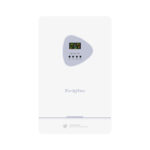
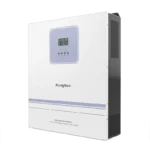
A battery inverter and a solar inverter-charger may look similar in a product catalogue, yet the functions inside their cabinets can differ considerably. One may only convert battery DC into AC. Another may also charge from utility power, manage a PV array and transfer loads between sources. Build a function checklist before comparing prices so the quotation covers the complete system you actually need.
Separate three energy-conversion jobs
The first job is inversion: supplying AC loads from a suitable DC source. The second is AC battery charging: using an accepted AC input to replenish the battery under a controlled charging profile. The third is solar charging or PV conversion: accepting a specified PV input and managing its electrical operating conditions. A product can combine some of these jobs, but the word “inverter” alone does not establish which ones are included.
Eaton’s power inverter buying guide distinguishes an inverter from an inverter/charger. Use that distinction as a starting point, then check solar capability separately. The presence of an AC charger does not by itself prove that PV modules can connect directly to the cabinet.
Translate the proposed system into a function matrix
| Required job | Question for the supplier | Evidence to request |
|---|---|---|
| Supply AC from a battery | Which battery voltage and AC output version are supported? | Exact model ratings and operating range |
| Charge from utility AC | Is an AC charger built in and configurable? | Charging ratings and accepted AC input conditions |
| Use PV directly | Is a solar input included, and what controller is fitted? | PV voltage/current limits and charging method |
| Maintain loads during source changes | What transfer function exists and under which conditions? | Mode descriptions and equipment compatibility |
| Coordinate with a managed battery | Which battery protocols and controls are supported? | Approved compatibility and configuration information |
Mark every answer as included, external, optional or unconfirmed. This prevents an accessory, separate controller or required installation component from disappearing between the product discussion and the final quotation. The matrix is particularly useful when several suppliers use similar names for products with different internal functions.
Do not confuse an AC charger with a solar controller
An AC charger receives AC power and controls battery charging. A PV controller receives power from an array within its specified electrical limits. Their input requirements differ. A cabinet with an AC input and battery terminals cannot be assumed to have a hidden PV input simply because it is advertised for a solar-related application.
If the selected inverter/charger has no direct PV input, the proposed system may need separate solar conversion equipment. That arrangement can be valid when properly designed, but the components must coordinate with the battery and the intended operating modes. Ask the designer to identify the energy path from the array to the battery or loads instead of leaving it implicit.
Check whether “built in” means the version being quoted
A family can include different power ratings, voltage versions and optional features. A catalogue illustration may show the highest-feature configuration while the quoted model differs. Match the complete model code to the specification and identify factory options explicitly. If an MPPT controller is optional, establish whether the price and delivery configuration include it.
Also distinguish physical provision from enabled functionality. A communication connector does not prove compatibility with every battery, and a monitoring slot does not establish that the required module is installed. The same discipline applies to solar input count, parallel operation and AC input arrangements. Verify the exact delivered configuration.
Read charging limits as a system
An inverter-charger may list an AC charging current, a solar charging current and a combined limit. Do not automatically add the first two numbers and assume the battery will receive that sum. The actual control policy, model limits and battery requirements determine what happens when multiple energy sources are available.
As an illustrative requirement, a battery supplier might permit no more than 50 A charging in a particular condition. A system with two potential charging sources must respect that constraint through an approved design and configuration. The example is not a charging recommendation for any Techfine battery. Obtain the selected battery’s limits and confirm how all chargers will observe them.
Look beyond source labels to operating behavior
A system intended mainly for outage backup may prioritize maintaining battery reserve. Another may prioritize daily solar use. Words such as solar-first, utility-first or hybrid are not complete descriptions of the power paths. Request a mode table showing which source supplies the load and which source charges the battery under the relevant conditions.
Include low solar production, loss of AC input, battery limits and recovery after shutdown in that discussion. A built-in solar controller does not automatically provide battery-free operation, and battery-free capability does not automatically establish uninterrupted backup. Those are separate operating requirements that need explicit documentation.
Compare integrated and separate equipment fairly
An integrated cabinet can reduce the number of separate devices to mount and coordinate. Separate components may offer flexibility for a particular site or expansion plan. Neither architecture is universally superior. Compare the complete design, including control coordination, monitoring, replacement access, space, installation work and the effect of a component failure.
Ask which functions remain available if one section requires service. Establish whether replacing the inverter also replaces the solar controller, and whether stored settings or communications need recommissioning. These questions make the comparison relevant to long-term operation rather than treating the cabinet count as the only measure of simplicity.
Use Techfine examples to sharpen the enquiry
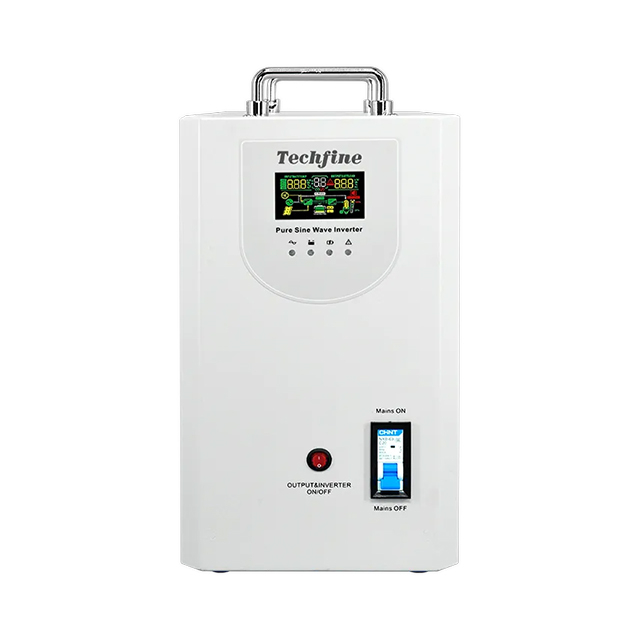
The Techfine HB series specification identifies a battery inverter with AC charging. Its description is a useful reminder to verify solar-input capability separately instead of inferring it from the broader category. Compare the relevant model against the solar inverter family’s documented PV inputs and charging functions.
Begin with the HB series page when discussing that platform, then state whether the project also needs direct PV connection. Techfine’s download center can help locate model documentation. Request the current applicable manual and a complete configuration list for the quotation.
Approve a diagram before approving the equipment list
A simple system diagram should identify the PV conversion equipment, AC input, inverter output, battery, chargers and required controls. It need not be a do-it-yourself wiring drawing. Its purpose is to show which component performs each job and where the operating limits apply. Qualified personnel must develop and install the electrical design.
Use the diagram and matrix together at quotation review. Every required function should have a named component and a documented limit. Every optional feature should have a clear purchasing decision. This makes missing equipment easier to discover before delivery, when it is still straightforward to correct the proposal.
Frequently asked questions
Does an inverter/charger always include MPPT?
No. It can combine inversion and AC charging without a direct PV controller. Check the input specifications for the exact model.
Can separate solar charging be added later?
Possibly, but the proposed controller, battery limits, controls and installation must be compatible. Reserve space alone is not an approved expansion design.
Does a solar inverter-charger replace every other device?
No. Batteries, protective devices, installation components and sometimes monitoring or communication accessories remain part of the system. Compare the complete approved configuration.