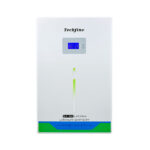
Gel and AGM batteries should be charged according to their exact product instructions, not simply a broad lead-acid label. Before commissioning a solar installation, compare the battery requirements with the complete charger profile, including voltage stages, current limits, timing and temperature compensation. The useful question is whether the selected settings suit the delivered battery and duty, rather than which chemistry name appears on a preset menu.
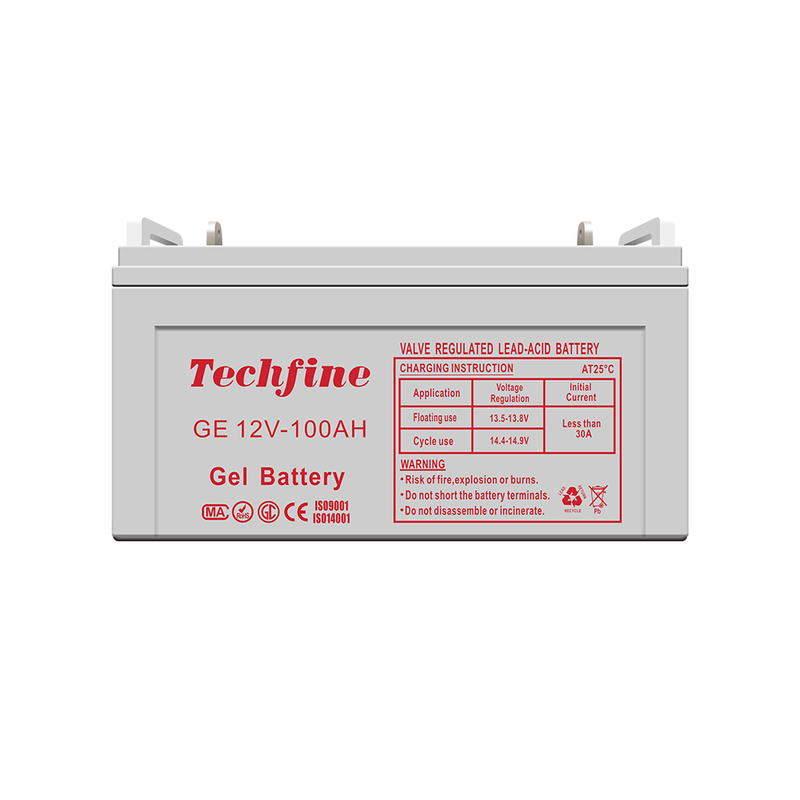
Identify the actual battery version
Record the model, nominal voltage, capacity and applicable technical document. Gel and AGM describe construction categories, while individual products can have different charging recommendations and intended duties. A setting copied from another battery of the same general type is not automatically appropriate.
Ask the supplier which instructions apply to cyclic operation, standby service or the actual mixed duty. Keep those conditions with the configuration record. A solar battery that is discharged regularly may need a different operating policy from equipment maintained primarily on standby.
Compare the complete profile
A charger can use a bulk stage, an absorption stage and a float stage under its supported algorithm. Understanding the labels is useful, but the actual values and transition rules must match the battery requirements. An appropriate voltage with an unsuitable duration is not a complete profile match.
Victron’s Gel and AGM datasheet describes charging stages for its covered products. Use it as an example of a qualified manufacturer specification rather than transferring its numbers to a Techfine battery. Request the current instructions for the exact battery being installed.
Check the absorption requirement
Determine the recommended voltage and how long or under what condition the charger should remain in absorption. The charger may use a fixed time, adaptive behavior or another supported rule. Confirm that its available controls can implement the battery’s requirements.
Do not infer that a longer absorption period always produces a better charge. Equally, a short daily charging opportunity may leave the intended recharge incomplete. The site duty and available energy should be assessed with the battery and charger suppliers.
Check float and standby behavior
Float settings concern how the supported charger maintains the battery after the preceding stages. A charger used in a continuously powered standby application can behave differently from one relying on variable solar availability. Confirm what happens overnight, after a long interruption and when normal charging resumes.
Ask whether storage or other special modes are part of the supplied algorithm and whether they are appropriate to the application. Do not assume a menu named maintenance is suitable for every sealed battery. The manufacturer’s operating instructions remain the reference.
Review charge current separately
Battery Ah capacity does not by itself determine the chosen current without the product’s charging recommendations. Confirm the permitted or recommended current for the exact battery and bank arrangement. Include every source that can operate at the same time.
If the inverter-charger and solar controller both charge the bank, review the combined situation. Setting each source independently to a seemingly acceptable value can still produce an inappropriate total. The control and configuration should match the complete installation.
Understand temperature compensation
Where the battery requires temperature-compensated charging, confirm the supported coefficient, reference temperature and measurement arrangement. The relevant temperature is not necessarily the controller’s internal temperature or the air outside the building. Sensor placement belongs in the approved installation.
Do not reuse a temperature-compensation policy from another battery chemistry without review. If the sensor is missing or its reading seems incorrect, follow the supplier’s diagnostic process. Changing an offset to obtain a preferred charge voltage can conceal a measurement problem.
Ask specifically about equalization and conditioning
Some chargers provide equalization, desulfation or other conditioning features intended for particular battery types. Do not assume they are permitted for the selected gel or AGM product. Ask for explicit approval and the exact procedure if such a function is proposed.
A charger exposing an option does not establish battery compatibility. Automatic scheduling deserves particular attention because a function may run later without an operator selecting it at that moment. Record which features are enabled, disabled or unsupported in the final configuration.
Use a charging-profile worksheet
| Item | Battery requirement | Charger confirmation |
|---|---|---|
| Absorption | Voltage and completion or duration basis | Available controls and selected values |
| Float or standby | Permitted maintenance behavior | Supported stage and recovery behavior |
| Current | Applicable bank charging limit | Individual and combined source settings |
| Temperature | Compensation requirements where applicable | Sensor arrangement and configured basis |
| Special functions | Explicit permission or restriction | Automatic and manual options reviewed |
The worksheet should identify the source document for every battery requirement. If the charger cannot reproduce the required behavior, resolve the equipment selection before installation rather than selecting the nearest preset and hoping it is adequate.
Verify the delivered configuration
Qualified personnel should confirm the installed equipment and settings against the approved design. Preserve the actual configuration, not only a proposed settings list. If a replacement charger or battery is delivered, review whether the earlier profile assessment still applies.
Use the manufacturer’s approved commissioning method and record relevant observations. This article does not instruct users to open batteries, alter safety valves or perform measurements on energized terminals. Service and testing should follow the correct qualified process.
Investigate incomplete charging as a system issue
If the battery is not recovering as expected, collect the charging history, source availability, load demand and relevant alarms. An apparently unsuitable profile may be one cause, but limited charging energy or simultaneous consumption can also influence the observation.
Avoid changing several settings at once without a recorded basis. Ask the supplier for an assessment using the actual equipment, battery condition and duty. Repeatedly applying a conditioning mode is not a substitute for understanding why the intended charging sequence is incomplete.
Prepare a Techfine battery enquiry
The Techfine GE battery page provides a product starting point. Send the exact intended battery and charger models, bank arrangement, duty and expected temperatures. Request the approved charging profile and any limitations before commissioning.
Keep that response with the system documents and review it when either device changes. A clear model-specific profile is more useful than a general statement that a charger supports lead-acid batteries.
Frequently asked questions
Can every AGM battery use one universal preset?
No. Check the exact battery recommendations and the charger’s actual algorithm.
Is a correct nominal voltage enough?
No. Stage values, timing, current, temperature and special functions also need review.
Should equalization be enabled by default?
Do not assume permission. Follow the selected battery’s explicit instructions.