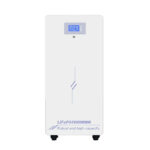
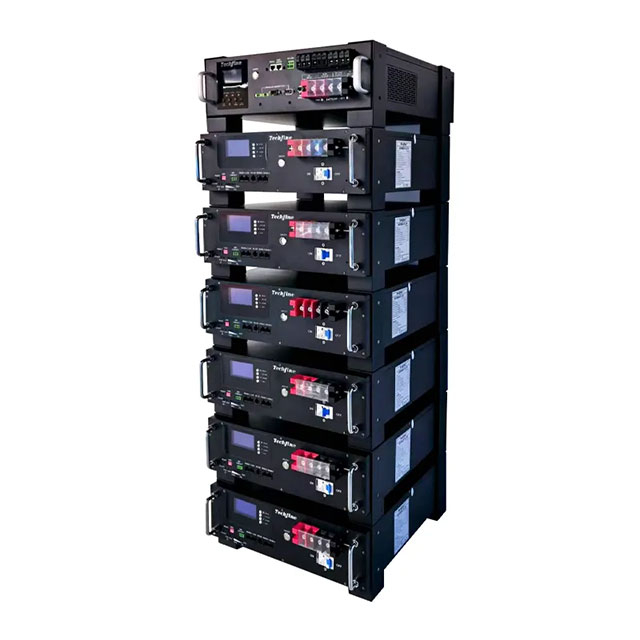
Wall-mounted and rack-mounted solar batteries can offer similar energy while imposing different installation and service requirements. Choose the physical arrangement around the site, exact equipment and maintenance plan. A neat front-panel photograph does not establish that a wall can carry the battery, that a cabinet can accept it or that a technician can remove it safely after the room is fully occupied.
Begin with a complete location survey
Record the available area, access route, nearby equipment and expected environmental conditions. Include the path from delivery to the final position. A battery that fits its intended location may still be difficult to bring through a doorway or move around an occupied utility room.
Identify installation and service responsibilities early. The mounting arrangement should be reviewed by qualified personnel using the actual battery mass, dimensions and manufacturer instructions. Do not decide the support design from nominal kWh or from the appearance of another installation.
Assess the wall and its approved mounting arrangement
For a wall-mounted battery, establish the wall construction, condition and suitability for the proposed load. Ask which brackets and mounting components are required for the exact version and who specifies their attachment. A product being described as wall-mounted does not approve every wall or fixing method.
Keep the manufacturer-required orientation, spacing and access visible on the layout. Consider the practical height for indicators and service points, along with the approved handling method. The electrical and structural installation must form one coherent plan rather than separate assumptions made by different suppliers.
Assess the complete rack, not only its front width
A rack-mounted module needs an appropriate support arrangement. Confirm cabinet depth, module dimensions, required rails or shelves, load rating and access. A nominal rack-width description is not proof that every existing cabinet can support the battery and its associated equipment.
Also review the cabinet’s total configuration. Several individually compatible modules can create a combined mass or service arrangement that the cabinet or site must accommodate. Include support equipment in the quotation instead of assuming it is already present.
Plan access to connections and controls
Identify where power connections, communication ports, controls and indicators are located on the selected product. Front access may be convenient, but rear or side connections can change the cabinet and room requirements. Leave the spaces required by the manufacturer rather than measuring only the battery’s outer dimensions.
Consider how cables remain accessible and protected during normal service. An installation that looks tidy with panels closed may be difficult to inspect or maintain. Do not require a technician to remove unrelated equipment just to reach a routine service point unless that is part of the approved design.
Keep environmental requirements model-specific
Mounting style does not establish an environmental rating. A rack battery is not automatically suitable for a hot industrial room, and a wall cabinet is not automatically suitable outdoors. Confirm temperature, moisture, dust and other relevant conditions for the exact battery and complete enclosure arrangement.
Victron’s battery installation manual illustrates the need to follow product-specific mounting and environmental instructions. Use the appropriate Techfine manual for Techfine equipment rather than copying another manufacturer’s mounting or spacing values.
Think through replacement before installation
Ask how a battery will be inspected, isolated and removed under the manufacturer’s service procedure. Include handling access and the effect on the rest of the system. A removable module is not automatically hot-swappable, and a wall battery is not automatically serviceable while the installation remains operational.
Document which work belongs to authorized service personnel and what service interruption is expected. The customer should understand the accepted arrangement before a fault occurs, when access and downtime can be harder to organize.
Compare expansion realistically
A rack can provide physical positions for additional modules, but empty positions do not prove electrical expansion is supported. Likewise, spare wall area is only one part of adding another battery. Permitted module combinations, communications, power distribution and protection still need a separate approved design.
Show the initial and possible future layouts together. Identify what support, access or infrastructure would need to change. This prevents a reserved location from becoming an informal promise that another battery can be added without a technical review.
Use an installation comparison worksheet
| Area | Wall arrangement | Rack arrangement |
|---|---|---|
| Support | Suitable wall and approved mounting components | Suitable cabinet and approved module support |
| Space | Battery, clearances and handling position | Cabinet footprint, module depth and service access |
| Connections | Accessible routes for the exact port locations | Cabinet cable access and module connections |
| Maintenance | Approved removal and replacement arrangement | Approved module service procedure and access |
| Expansion | Supported additional equipment and wall space | Supported module configuration and cabinet capacity |
Neither arrangement is universally more professional or reliable. The better choice is the one that meets the actual site and service requirements with documented equipment compatibility and an approved installation.
Keep the electrical comparison separate
Similar mounting dimensions do not establish equal nominal voltage, BMS capability or inverter communication. Compare those specifications independently. A mechanically convenient replacement can still be electrically unsuitable, even when both products are sold as solar storage batteries.
Ask for the exact model’s electrical and physical documentation together. This helps the structural, electrical and service teams work from the same configuration rather than each approving a different version of the proposal.
Use the Techfine range as a starting point
The LB series provides a wall-battery product starting point, while the LR series provides a rack-mounted reference. The LR manufacturer description identifies its rack format. Confirm the exact model and required mounting equipment with the supplier.
Send a location drawing, access dimensions, environmental conditions and maintenance expectations with the enquiry. Request an itemized installation arrangement, including brackets, cabinet support and required accessories. A clear scope is more useful than an unexplained choice between a wall picture and a rack picture.
Prepare an enduring handover record
Keep the final layout, mounting specification, equipment list and service-access requirements with the system documentation. Mark the spaces that must remain available. A later storage shelf or room alteration should not silently remove access required by the original installation.
Frequently asked questions
Will a rack battery fit any 19-inch cabinet?
Do not assume so. Confirm dimensions, depth, support, load rating and connection access for the complete arrangement.
Can a wall-mounted battery be moved into a rack?
Only if the manufacturer explicitly supports that configuration. Mounting orientation and support are product-specific.
Does a spare rack position guarantee expansion?
No. Electrical compatibility and the approved module arrangement must also support the change.