A solar controller labelled with a 150 V PV input is not thereby designed to charge a 150 V battery. PV input voltage, battery system voltage and charging current describe different parts of the equipment. Read each label with its circuit and conditions before selecting a model. Confusing those quantities can produce an incompatible proposal even when the controller’s advertised wattage appears adequate.
Draw the input and output boundaries
The PV input receives energy from the solar array. The battery connection serves a specified storage platform and charging function. A controller can support a PV voltage substantially different from the nominal battery voltage, but only within its documented architecture and limits.
Mark those boundaries on the system worksheet. Write PV volts, battery nominal volts and battery charging amps in separate fields. A short product name containing several numbers should lead to the full specification rather than become the entire design basis.
Identify what the PV voltage number means
A maximum PV input voltage is an upper equipment limit, while a tracking range or startup condition serves another purpose. Do not assume that a controller labelled 150 V is intended to operate at exactly 150 V or that its full power is available at every lower voltage.
The array design must meet all relevant conditions, including the required upper-voltage assessment. The maximum input label is not a recommended string voltage. Use the actual module data and approved design method rather than planning directly against a convenient round number.
Identify supported battery platforms
Find the nominal battery voltages and whether selection is automatic, fixed or otherwise configured. A controller family can contain different versions. A higher-voltage PV option does not automatically add a new supported battery platform to every model.
The Techfine M specification lists system-voltage information separately from PV input options. Read the exact column and model code. Do not infer one version’s battery support from another version elsewhere in the family table.
Keep battery charging voltage distinct from nominal voltage
A nominal battery platform is not the complete charging profile. The battery manufacturer specifies the permitted charging conditions, and the controller must be able to implement the approved configuration. A nominal 24 V description, for example, does not supply an absorption or other stage setting by itself.
Also review chemistry and management requirements. Automatic voltage detection, where provided, is not automatic approval of every battery with that nominal label. Confirm the selected battery’s charging and control arrangement separately.
Read current at the correct connection
PV input current and battery charging current can differ because they refer to different circuit conditions. Do not add or substitute them as though they describe one conductor. Ask the supplier to identify any unclear rating and the conditions under which it applies.
A controller’s battery-side current rating is not a promise of the same numerical PV current capability. The PV input has its own operating and short-circuit limits where specified. Both sides must be assessed using the correct values.
Use a simplified power example carefully
Assume an illustrative conversion stage receives 600 W and delivers 570 W after an assumed loss. At an example battery-side voltage of 28.5 V, that output corresponds to 20 A. A PV-side voltage of 100 V would involve a different current for the same input power. These are arithmetic examples, not Techfine performance ratings.
The example explains why a high PV voltage does not imply a high battery voltage and why current numbers on the two sides need not match. Actual operation also depends on available solar power, battery demand and the equipment’s limits.
Interpret maximum PV power with its battery condition
A controller may list different supported array power values for different battery platforms. Check the conditions attached to each value rather than choosing the largest number anywhere in the table. The product’s accepted array arrangement and output limits must fit the actual battery system.
Do not assume unlimited array oversizing is permitted because the controller can limit charging current. The manufacturer may impose independent voltage, current or power restrictions. Request a model-specific assessment of the proposed array.
Build a label-reading worksheet
| Specification | Where it applies | Question to resolve |
|---|---|---|
| Maximum PV voltage | Solar input | Does the approved array remain within the upper limit? |
| Startup and tracking | Solar-input operation | Can the array operate in the supported conditions? |
| System voltage | Battery platform | Is the exact battery voltage supported? |
| Charging current | Battery-side output | Does the proposed charging duty fit the battery and controller? |
| Array power allowance | Complete configuration | Which battery platform and model conditions apply? |
Use the worksheet for every quoted version. It prevents a seller or buyer from combining the most favorable values across unrelated columns into an arrangement that no real model supports.
Resolve ambiguous product titles
Marketplace titles can compress voltage, current, power and capacity into one long phrase. Treat the title as an identifier, then obtain the actual datasheet and manual. If a model suffix or option changes a rating, include it in the quotation.
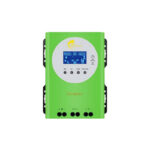
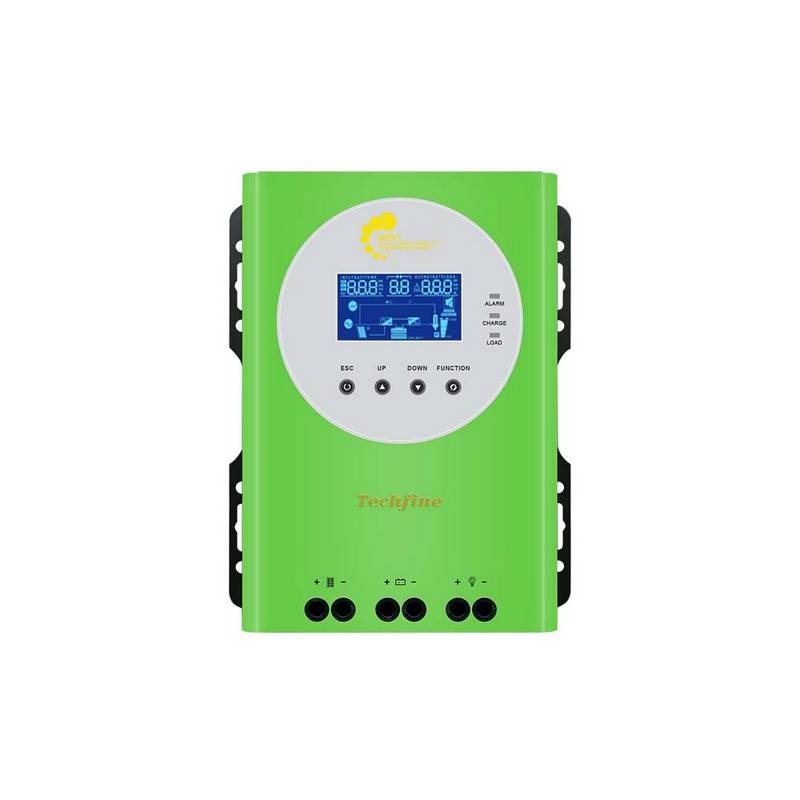
A photograph can help confirm product identity but cannot establish the full electrical limits. Ask for a readable rating label and the matching current document when the proposed version is unclear. Keep the confirmation with the purchase record.
Confirm the Techfine model and installation
The Techfine M series page provides a reference for the discussion. Send the module specification, intended string arrangement, battery model and charging requirement. Ask the supplier to identify the applicable input, output and configuration limits for the exact controller.
Qualified personnel should verify the installed version and settings against that approved design. This article does not provide connection instructions or permit experimental wiring to test which voltage a controller accepts.
Frequently asked questions
Does 150 V PV mean a 150 V battery?
No. The PV limit and supported battery platform are separate specifications.
Can I use the largest array-power value for every battery voltage?
Only if the exact specification permits it. Read the applicable conditions and model column.
Is the charge-current number also the PV-current limit?
Do not assume so. Identify the circuit and definition associated with each rating.