A 12.8 V LiFePO4 battery may be offered as a replacement for a lead-acid battery in a nominal 12 V application, but matching the general platform is only the first check. Chargers, connected loads, protective functions and environmental conditions must suit the exact replacement. Treat the change as a compatibility review rather than assuming a battery with similar terminals is a universal drop-in upgrade.
Inventory the complete existing system
Identify every charging source and every important load connected to the battery. A solar controller, mains charger and alternator can behave differently. Include devices that are not obvious in normal operation, such as a standby charger or an automatic charge source enabled by a timer.
Record model codes and current settings before changing equipment. The review should describe the actual installation, not only the battery being removed. A replacement can appear to work under one charger while remaining incompatible with another source that becomes active later.
Check charging profiles explicitly
Obtain the replacement battery’s permitted charging requirements and compare them with each source. A charger setting labelled lithium is not a complete specification, and a lead-acid profile is not automatically suitable because its nominal voltage is similar. Confirm the applicable voltage, current and control conditions.
Pay particular attention to automatic conditioning functions. A charger may offer desulfation or high-voltage equalization intended for specified lead-acid applications. Do not enable such treatment on a LiFePO4 pack unless its manufacturer expressly approves it. Battery cell balancing inside a supported BMS is a different function from applying an external lead-acid equalization profile.
Review the battery’s operating voltage window
Connected equipment must tolerate the replacement battery’s permitted voltage range, not only its nominal label. A device can have low-voltage alarms or shutdown settings designed around the original battery behavior. Check the actual load requirements and the new battery documentation together.
Voltage-based state-of-charge indications may also behave differently. A familiar gauge does not necessarily remain an accurate energy estimate after changing battery technology. Ask which monitoring arrangement is supported and explain any changed indication to the user during handover.
Verify continuous and startup demand
The BMS and pack have permitted current and power conditions. A replacement with adequate Ah capacity may still be unsuitable for a demanding starting load. Include the normal simultaneous load and any transient requirement in the review rather than selecting by capacity alone.
Ask the battery supplier what happens when a limit is reached and how normal operation is restored. Protective disconnection is not an operating feature to rely on repeatedly. The complete installation should work within the documented limits rather than using the BMS as the routine load controller.
Assess each source of charging current
A charging source may need its own current-control and protection arrangement. Where an alternator is involved, obtain a supported design for both the alternator and replacement battery rather than assuming direct substitution is acceptable. Do not infer that every charging source will protect itself against the demand a new battery can present.
Victron’s lithium system-design guide treats charging sources and BMS integration as system questions. Its specific equipment rules apply to its covered products. Use the replacement battery supplier’s approved arrangement for the actual installation.
Keep temperature requirements separate from nominal voltage
Confirm the permitted charging and discharging temperatures and any protective or heating functions actually included. A battery operating successfully in warm weather has not demonstrated that it can be charged under colder conditions. The sensor location and the approved control response matter.
Do not assume a low-temperature charging cutoff or internal heater exists merely because the battery is LiFePO4. Request the exact feature and operating description. Where conditions fall outside the permitted range, the installation needs a supported solution rather than an override of protective controls.
Verify mechanical and connection compatibility
Compare dimensions, terminal arrangement, mass, mounting and approved orientation. Similar physical size does not guarantee that the existing restraint or connection arrangement remains suitable. The qualified installer should assess the actual replacement and its instructions.
Also review protection and wiring through the appropriate design process. This article does not provide a battery connection sequence or instruct users to work on energized terminals. A technology change should not be treated as permission to reuse every component without assessment.
Use a replacement review matrix
| Existing item | Question for the replacement | Evidence to retain |
|---|---|---|
| Mains charger | Does its complete profile meet the battery requirements? | Approved settings and model information |
| Solar controller | Are charging stages and total current suitable? | Controller and battery configuration record |
| Alternator or other source | Is a supported charging arrangement provided? | Reviewed system design |
| Loads | Are voltage range and startup demands acceptable? | Load schedule and compatibility confirmation |
| Installation | Are mounting, protection and temperature conditions suitable? | Qualified acceptance documentation |
Mark unconfirmed items before purchase. If a source cannot be configured appropriately, resolve that part of the system rather than assuming the new battery’s protection will compensate for it.
Do not assume series or parallel permission
A replacement approved for one battery position may have restrictions on combining packs. Ask for the permitted arrangements for the exact model. Never infer that a lead-acid bank’s series or parallel structure can be reproduced with any similarly labelled lithium battery.
If the project requires a larger bank, have the supplier confirm the complete configuration, management and protection requirements. Keep this separate from whether one individual pack can power a single nominal 12 V device.
Discuss the Techfine LP version precisely
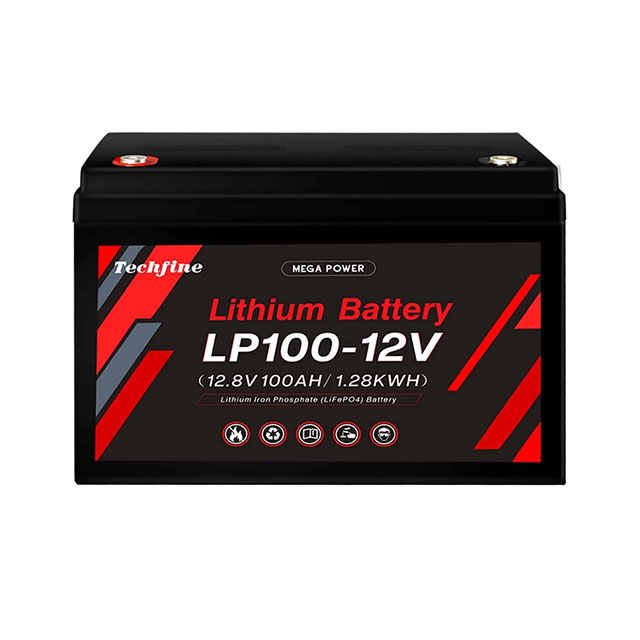
The Techfine LP range identifies 12.8 V LiFePO4 versions. Select the exact capacity and request its current charging, discharge, temperature and combination requirements. The LP product page can anchor the replacement enquiry.
Provide the existing charger and controller models, load details and installation conditions. Ask for a documented compatibility response before purchasing. That is more useful than a generic assurance that lithium replaces lead-acid.
Frequently asked questions
Can I keep every existing charger?
Only if each source’s behavior is suitable for the exact replacement battery and approved arrangement.
Does internal balancing permit external equalization?
No such permission should be inferred. Confirm the battery’s charging instructions and distinguish cell management from an external conditioning profile.
Is matching nominal voltage enough?
No. Review the complete voltage range, power demand, charging, temperature and installation requirements.