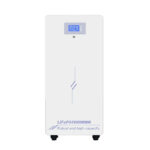
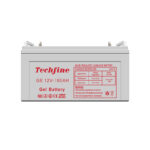
Cold-weather planning for a LiFePO4 battery must distinguish charging, discharging and storage. A pack can have different permitted temperatures for those activities, and an enclosure rating does not establish low-temperature charging capability. Use the exact battery instructions, verify the protective and control arrangement, and confirm any heating feature rather than assuming it is present.
Read separate temperature ranges
Find the permitted charging range, discharging range and storage conditions in the current model documentation. Do not use a low discharge-temperature number as permission to charge at the same temperature. A broad operating headline can conceal important distinctions in the detailed table.
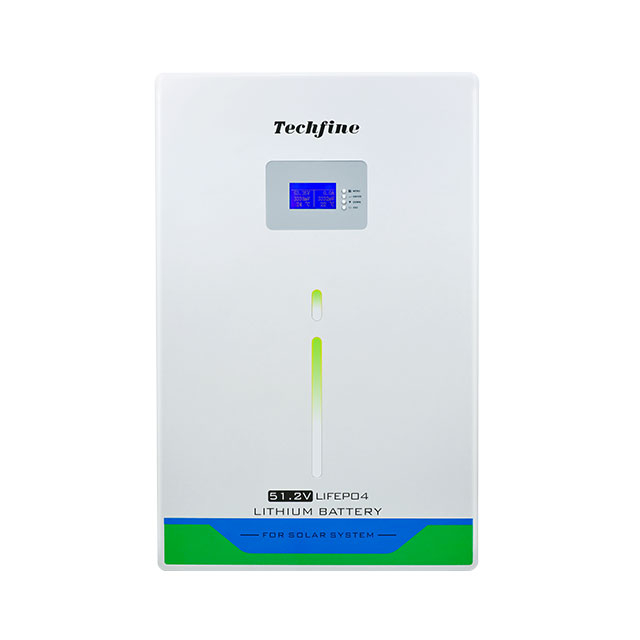
The Techfine LC specification lists charging and discharging conditions separately. Confirm the exact applicable version with the supplier. A family name or outdoor photograph is not sufficient evidence for the winter charging duty of a particular pack.
Distinguish ambient, enclosure and cell temperature
The weather report, room air and temperature inside the battery can differ. A battery placed in a cold location may remain cold after the surrounding air begins to warm. Identify which temperature the management system measures and how it uses that information.
Do not assume that moving a temperature probe or changing an offset makes charging permissible. The protective configuration must reflect the approved equipment design. Ask the supplier to explain sensor placement and relevant indications for the actual pack.
Verify the low-temperature charging response
Ask whether the battery restricts charging at the relevant temperature and how that restriction reaches every charging source. A protective function can operate internally or through a supported control arrangement, depending on the product. A generic BMS feature list does not establish the complete system response.
Victron’s Lithium Smart installation instructions describe an allowed-to-charge minimum temperature for that system. Its threshold and configuration are product-specific. Do not copy another manufacturer’s temperature settings into a Techfine battery or assume a universal value applies to every design.
Include all charging sources
A site can charge from a solar controller, an inverter-charger and other equipment. Determine how each source observes the battery’s permitted conditions. A compliant main inverter does not resolve an independent charger that continues operating outside the approved arrangement.
Show the charging paths on the system diagram and identify the responsible control for each one. If a source cannot follow the required restriction, ask the designer for a supported solution. Do not rely on users remembering to disconnect one device every cold morning.
Confirm whether heating is actually included
Some battery designs provide a supported heating arrangement, but it must be verified for the exact model and supplied version. Ask what powers the heater, what enables it and under which conditions charging becomes permitted. An optional accessory should not be treated as standard equipment.
Also identify the energy consumed by heating and how that affects the service objective. A winter backup plan should account for the complete system demand and available charging opportunity. Do not use another product’s warm-up time or energy consumption as a Techfine specification.
Evaluate the location as a whole
Review the battery’s mounting, moisture exposure, ventilation and service access alongside temperature. Moving it to a warmer location can change cable routing or other installation requirements. An added enclosure or cover needs approval for the complete arrangement rather than serving as an informal thermal modification.
Insulation can influence heat transfer, but it is not proof that the battery remains within a permitted range indefinitely. Any environmental-control proposal should be assessed with the manufacturer’s requirements and the site’s actual winter conditions.
Plan charging opportunity realistically
Available solar energy can coincide with a period when the battery is still outside its permitted charging conditions. The usable charging window may therefore differ from daylight duration. Record the seasonal duty and ask how the proposed system restores its reserve after an outage.
A larger battery does not automatically solve that timing problem. More storage can also require more energy to recover. Evaluate the complete energy and control plan rather than assuming summer performance continues unchanged in winter.
Use a winter readiness worksheet
| Item | Question | Evidence needed |
|---|---|---|
| Temperature limits | What is permitted for charge, discharge and storage? | Exact model and current instructions |
| Measurement | Which sensor represents the relevant battery condition? | Supported sensor and BMS description |
| Charging control | How does every source respect the restriction? | Approved system-control arrangement |
| Heating | Is it included, optional or absent? | Feature-specific operation and energy information |
| Recovery | Can the reserve be restored in the seasonal window? | Winter duty and energy assessment |
The worksheet should identify assumptions that still need confirmation. A supplier can assess a described winter application more effectively than an enquiry asking only whether a battery works in the cold.
Verify through the approved commissioning process
Qualified personnel should confirm the installed sensors, controls and settings using the manufacturer’s procedures. Do not deliberately expose the battery to unsuitable conditions or defeat a cutoff to test an assumed feature. The objective is evidence that the supported arrangement respects the limits.
Record what the user should see when charging is restricted and what recovery behavior is expected. A cold-weather charging pause may be a normal protective response rather than a charger fault. Clear handover information reduces unnecessary resets and unsupported adjustments.
Separate cold protection from general capacity claims
A nominal kWh label or room-temperature cycle-life claim does not specify winter usable energy or charging behavior. Request the relevant operating information for the actual temperature conditions. Keep measured performance, supplier estimates and contractual commitments labelled separately.
If winter service is essential, make the requirement part of the quotation review and acceptance plan. The proposed battery and controls should be assessed against that duty rather than relying on a broad lithium marketing statement.
Prepare a Techfine winter application enquiry
Use the LC battery page or the exact selected family as the reference. Provide expected temperatures, installation location, charging sources, load duration and reserve requirement. Ask for the model-specific temperature limits and the complete supported protection or heating arrangement.
Frequently asked questions
Does cold discharge capability permit cold charging?
No such permission should be inferred. Read the charging conditions separately.
Does every LiFePO4 pack include heating?
No. Confirm the actual supplied feature and its operation for the selected model.
Should a charging cutoff be overridden to recover energy faster?
No. Preserve protective controls and resolve the application through the supplier’s approved design.