MPPT and PWM solar charge controllers interact with a PV array differently, so the choice affects array matching as well as the controller purchase. Compare the proposed modules, battery platform and operating conditions before assuming one label always provides a fixed energy advantage. A controller must first support the complete electrical arrangement; expected yield should then be assessed for that arrangement.
Understand the operating distinction
A PWM controller regulates charging through switching behavior that links array operation closely to battery voltage during relevant operation. An MPPT controller seeks an array operating point and converts power to the battery side within its supported design. This can permit a different relationship between array voltage and battery voltage.
Victron’s PWM and MPPT technical comparison explains the distinction using its stated examples and conditions. The principle helps interpret a system proposal, but its example gains are not universal predictions or Techfine performance figures.
Start with the modules already selected
Obtain the actual module voltage and current information and the proposed series and parallel arrangement. Do not select the controller solely from total module watts or from a nominal panel description. The electrical operating point and limits must fit the chosen controller.
For a small existing installation, a change in controller type may also require a review of array configuration and other equipment. Replacing one box does not automatically produce a supported design with the modules connected in the same way.
Consider battery-voltage matching
The battery’s nominal platform and actual charging requirements constrain the system. With a PWM arrangement, matching array characteristics to the intended battery operation is particularly important. With MPPT, the proposed voltage relationship must still remain within the specific controller’s accepted input and output conditions.
Do not interpret MPPT as permission to connect any higher-voltage array to any lower-voltage battery. Maximum PV voltage, starting conditions, tracking range and current limits remain applicable. The product’s supported conversion architecture must match the proposal.
Evaluate expected energy under relevant conditions
The difference in harvested energy depends on the array’s characteristics and operating conditions. Temperature, irradiance and the battery’s charging state can influence the useful comparison. A fixed percentage copied from a sales page cannot describe every installation.
Ask for the assumptions behind an estimate and whether charging limits or battery demand restrict the useful energy. Harvesting more available PV power is valuable only where the system can accept or use it. A full battery and limited load can change the practical result.
Keep conversion and tracking performance separate
Tracking performance describes how effectively the controller follows the intended PV operating point under a defined method. Conversion efficiency concerns energy or power passing through the controller under stated conditions. They are not interchangeable numbers.
An attractive tracking percentage does not mean that the same percentage of all sunlight becomes stored battery energy. Module conversion, wiring, controller losses and charging behavior belong to different parts of the system. Keep the measurement boundary clear when comparing specifications.
Review wiring and protection through the complete design
A different array voltage can change installation considerations, but it does not remove cable, connector, isolation and protection requirements. Qualified personnel should assess the actual circuit conditions and applicable equipment instructions. Do not reuse a wiring arrangement simply because both controllers have terminals marked PV and battery.
This article does not provide a connection sequence or instructions for altering energized PV circuits. Any controller substitution should follow an approved design and commissioning process for the exact modules, battery and equipment.
Compare more than the controller’s price
Include any array changes, installation work, monitoring requirements and service implications. A lower controller price can be offset by a less suitable array match or a different installation scope. Conversely, an expensive feature is not automatically justified for a modest duty with an already suitable arrangement.
Use the same load and charging objective in both quotations. A fair comparison describes the complete system’s expected service rather than ranking two boxes with different assumptions about the array and battery.
Use an architecture checklist
| Question | PWM proposal | MPPT proposal |
|---|---|---|
| Array compatibility | Check module characteristics against battery-linked operation | Check input limits, startup and tracking conditions |
| Battery charging | Verify the exact supported profile and current | Verify the exact supported profile and current |
| Expected energy | State the relevant operating assumptions | State the relevant operating assumptions |
| Installation scope | Identify required components and work | Identify required components and work |
| Acceptance | Define the required charging service | Define the required charging service |
The checklist can reveal that a proposed module arrangement is unsuitable before the energy comparison even begins. Resolve compatibility first; a theoretical efficiency advantage cannot rescue an unsupported electrical configuration.
Consider control and maintenance requirements
Identify which battery settings, temperature information and monitoring functions are required. Neither topology label guarantees every management feature. The actual controller version and accessories determine what is available to the installer and user.
Ask who will maintain the configuration and how a later battery or module change will be reviewed. A documented controller selection is easier to support than an installation whose settings were chosen only from a broad battery-type menu.
Assess the Techfine MPPT option specifically
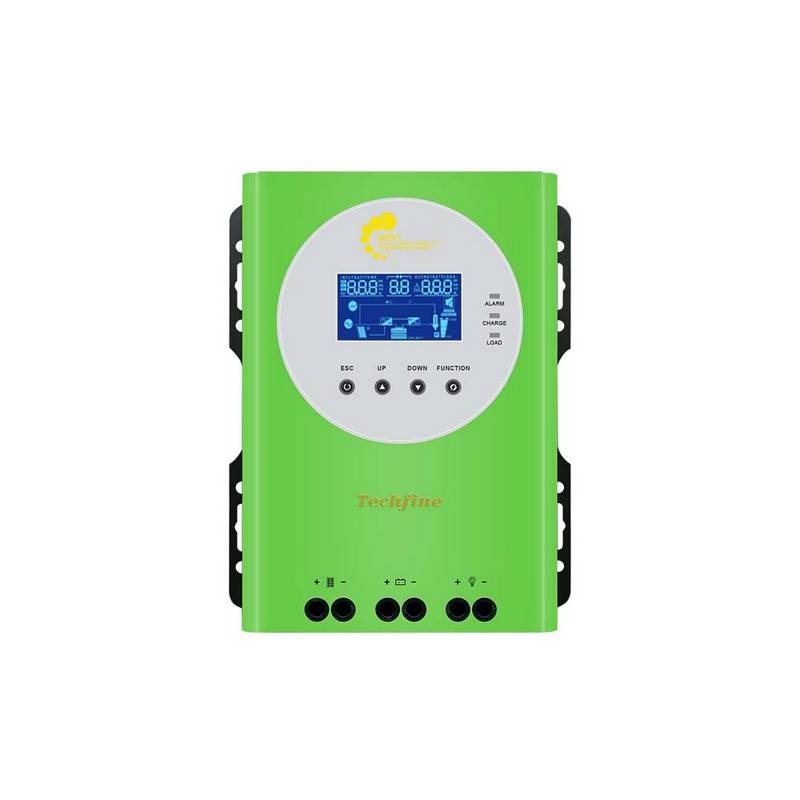
The Techfine M series page provides a starting point for an MPPT proposal. The manufacturer specification distinguishes versions and input options. Confirm the exact model rather than treating the family as one universal controller.
Send the module datasheet, proposed array arrangement, battery requirements and site conditions with the enquiry. Request a model-specific compatibility review and an explanation of the expected energy basis if comparing it with a PWM alternative.
Verify the final system
At commissioning, qualified personnel should confirm the installed configuration against the approved design and observe the intended charging behavior through supported procedures. Preserve the equipment identity, settings and results. A display showing charging at one moment is not a complete record of compatibility.
Frequently asked questions
Does MPPT always provide the same percentage gain?
No. The array, temperature, charging state and system limits affect the result.
Can PWM use any array with the same total watts?
No. Module voltage and current characteristics and the supported arrangement must also fit.
Can I replace PWM with MPPT without a review?
Do not assume that. Confirm the complete proposed configuration and installation requirements.