An essential-load backup panel defines which services an inverter is expected to preserve during an outage. Its value comes from a deliberate circuit schedule, not simply moving as many circuits as possible onto a backup output. Identify the complete services that matter, quantify their power and energy needs, and have a qualified designer develop the supported distribution and protection arrangement.
Choose services before choosing circuit labels
A circuit labelled office sockets can contain a router, a computer, a heater and a kettle. The label alone does not describe its outage duty. Begin with the services the user needs: communication, selected lighting, refrigeration or a defined business process. Then identify every device and existing circuit involved.
Consult the people who use the building. A nominally unimportant device can support an important service, such as the switch that links a security recorder to the network. Conversely, a large convenience appliance can dominate battery demand without contributing to the required outage service. Make these decisions explicit before the electrical design is finalized.
Map dependencies across the service chain
List the devices that must work together. Internet access may require a modem or optical terminal, router, network switch and the user’s device. A control process may depend on sensors and communication equipment located outside the main work area. Preserving only the most visible component can leave the entire service unavailable.
Record dependencies that do not involve electricity as well. A powered pump may still rely on an external water supply, while an internet connection can depend on infrastructure beyond the premises. A backup panel can support the selected electrical loads; it cannot guarantee availability of every external service they use.
Separate running power, starting demand and energy
Running demand helps establish the inverter’s sustained duty. Starting demand and simultaneous operation affect its short-duration requirement. Energy over the intended outage period affects storage needs. These are separate calculations. A small steady load used for many hours can consume more energy than a larger device used briefly.
For an illustrative schedule, 200 W of communications and lighting used for six hours represents 1.2 kWh at the loads. Adding an appliance averaging 300 W for the same interval adds 1.8 kWh. These arithmetic examples exclude conversion losses and do not size a battery. They show why the choice of included services can matter as much as the inverter’s headline kilowatt rating.
Build a circuit and service worksheet
| Service | What to identify | Outage requirement |
|---|---|---|
| Communication | Every modem, router and switch in the local chain | Required hours and acceptable interruption |
| Selected lighting | Actual rooms, fittings and control devices | Minimum useful coverage |
| Refrigeration | Equipment model, cycling and starting demand | Permitted delay and required service |
| Work equipment | Computer, storage and associated peripherals | Continued operation or controlled shutdown |
| Other proposed circuits | Hidden or discretionary appliances on shared circuits | Include, redesign or leave outside backup |
Give each proposed service a clear owner who can explain the requirement. Mark estimates and unresolved circuit contents. A designer can then assess the actual distribution rather than inheriting a vague promise to back up the house or business.
Check the supported backup architecture
Confirm which inverter output serves the backup distribution, how the intended separation is achieved and what operating limits apply. A grid-connected solar inverter is not automatically a source for an isolated essential-load panel. The selected equipment and complete installation must explicitly support the required duty.
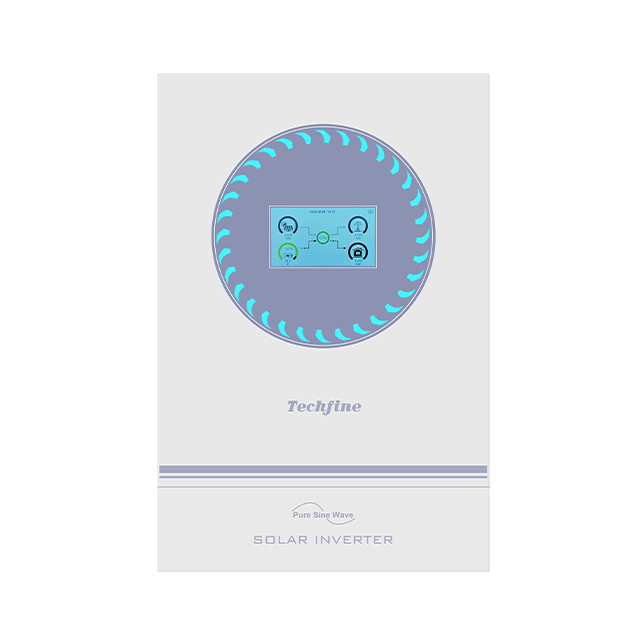
Techfine’s hybrid inverter overview distinguishes backup supply from grid-interaction requirements. Use the matching manual and an approved system design for the exact model. This guide does not provide a wiring arrangement, neutral/earth instructions or a procedure for modifying an existing distribution panel.
Keep shared circuits and accidental loads visible
A shared socket circuit can acquire new loads after commissioning. Someone plugging in a portable heater can change the outage demand substantially. Consider whether the proposed circuit grouping is practical and how users will recognize its limits. Labels and handover instructions should describe the actual service rather than imply unlimited capacity.
Where circuit changes are required, qualified personnel should develop them as part of the electrical design. Do not rely on extension leads or informal user memory to turn a poorly defined arrangement into a permanent essential-load system. The final circuit schedule should agree with the installed distribution.
Define the outage operating policy
Agree on the intended duration of service and any actions users should take during a prolonged outage. A modest panel can still exhaust its available energy if every included load runs indefinitely. Explain which services have priority and how the customer will know the system is approaching its operating limits.
Do not place specialist life-critical equipment into a general backup plan without the appropriate engineered assessment. Its supply and continuity requirements need dedicated consideration. A household or office load-priority discussion is not a substitute for the equipment manufacturer’s requirements and a suitable risk assessment.
Verify the service outcome at commissioning
The acceptance record should confirm that the intended circuits are supplied in the approved backup mode and that excluded circuits behave as designed. Check the actual devices and services, not only whether the inverter display reports battery operation. Use a qualified commissioning team and manufacturer-approved procedures.
Record any interruption observed by sensitive equipment and whether recovery is automatic or requires user action. If a computer must shut down safely, include its supporting network or shutdown signaling in the design. If uninterrupted operation is required, verify that complete requirement rather than accepting eventual recovery.
Keep the panel schedule current
Store the approved circuit schedule, load assumptions and commissioning record with the system documents. Review them when the building layout, appliances or inverter changes. Adding a new circuit or replacing a pump can alter both power and energy requirements, even if the number of backed-up circuit breakers remains the same.
Use the Techfine hybrid inverter category to begin product selection, then provide the service worksheet with the enquiry. Request a model-specific design review that addresses the actual essential-load duty, battery system and installation conditions.
Frequently asked questions
Does an essential-load panel need a dual-output inverter?
Not as a universal rule. The supported architecture depends on the selected inverter and complete design. Dual-output load management is a separate feature to evaluate where relevant.
Can I select circuits by breaker size alone?
No. Breaker labels do not describe the actual running, starting or energy demand of connected equipment. Identify the loads and services.
Does adding more circuits increase backup capacity?
No. It expands the possible demand. Available inverter power and stored energy remain constraints that must be reviewed.