Cold start and automatic restart describe different UPS behaviors. Cold start concerns beginning battery-powered operation when normal AC input is unavailable. Automatic restart concerns what happens after a shutdown when conditions recover. Confirm both separately if the installation must start during an outage or recover without someone pressing a button. Neither term alone describes the complete sequence for the connected equipment.
Define the starting situation
Write down whether the UPS is already operating when the outage occurs or is switched off and needs to begin supplying a load. Those are different scenarios. A UPS that transfers successfully from normal operation to battery has not thereby demonstrated that it can start from an off state without AC input.
Also identify what caused the previous shutdown. A deliberate user shutdown, a battery-exhaustion shutdown and a protective fault may have different recovery rules. Ask the supplier about the actual scenario instead of requesting an undefined auto-start feature.
Understand cold start
Where supported, cold start allows the UPS to begin supplying temporary battery power without an available utility input. It still depends on the product’s approved procedure, battery condition and connected load. It does not mean the UPS can operate without a usable battery or start every appliance within an advertised VA label.
Eaton’s 5E Gen2 description identifies starting without mains as cold start. This explains the term for a named product, not a universal Techfine capability. Verify the feature and instructions for the exact Techfine model being quoted.
Understand automatic restart after recovery
Automatic restart can make unattended recovery possible after a supported shutdown condition. The applicable input conditions, delay, battery requirement and output policy are model-specific. A product may wait for a valid source or an approved recovery condition before restoring output.
Schneider Electric’s Back-UPS CS feature description lists cold-start capability separately from automatic restart of loads after utility power returns. That separation is a useful purchasing principle. Request distinct answers for the two functions instead of accepting one feature as proof of the other.
Separate UPS output recovery from device recovery
A UPS restoring AC output does not guarantee that the connected equipment will resume its application. A computer may remain off, a network device may restart automatically, and a process controller may require an operator. The device’s own policy is part of the service sequence.
For an unattended installation, map every required device from power restoration to useful service. Include storage readiness, network availability and any application dependencies. The UPS can restore a supply according to its design; the customer still needs a coherent recovery plan for the equipment.
Consider battery reserve before repeated restarting
Following a long outage, the battery may have little energy available. If the normal supply returns only briefly and fails again, immediate load restoration can lead to another interruption. Discuss the expected outage pattern and the supported restart policy with the supplier.
Do not assume every UPS allows a configurable battery threshold or recovery delay. Ask what the exact model provides and how the chosen policy is implemented. A catalogue statement about automatic restart does not establish every possible setting.
Assess startup load separately from steady demand
Several devices starting together can impose a different demand from their normal running load. Review the supported output capability and the actual recovery sequence. A system that operates comfortably once running may encounter a more demanding simultaneous start after power returns.
Where sequencing is needed, use an approved arrangement with compatible equipment. Do not assume that a UPS has independently controllable outlet groups or programmable delays unless those features are explicitly included. Identify any additional control equipment in the quotation.
Use a restart behavior matrix
| Scenario | Behavior to confirm | Required record |
|---|---|---|
| UPS off, AC unavailable | Whether cold start is supported and under what conditions | Exact model procedure and battery requirement |
| UPS running, AC fails | Normal transfer and battery-supported service | Accepted load and transition behavior |
| Battery shutdown, AC recovers | Automatic or manual output recovery | Supported conditions and settings |
| Output restored | Connected equipment returns to the intended service | Device and application recovery sequence |
| Protective fault occurred | Manufacturer-approved service and recovery response | Fault explanation and responsible support action |
This matrix prevents a single successful test from being generalized to unrelated situations. Record which scenarios were actually verified and which remain subject to supplier confirmation.
Verify with an appropriate acceptance plan
Use the manufacturer’s procedures and a planned maintenance window appropriate to the load. Do not unexpectedly interrupt production systems or deliberately exhaust batteries merely to explore the controls. Qualified personnel and the responsible administrator should agree how to demonstrate the required behavior.
Observe the service outcome as well as the UPS display. Record battery condition, load, settings and the sequence of events. If the UPS restores output but the application remains unavailable, the recovery requirement has not yet been met even though the electrical output is present.
Keep fault recovery distinct
Automatic restart after an ordinary power interruption is not permission to repeatedly reset an unresolved fault. An overload, temperature condition or other protective event needs the model-specific investigation and recovery process. Preserve alarms and useful event records before changing settings.
Tell users which normal actions are supported and when service assistance is required. A clear handover reduces the chance that an operator treats every interruption as a reason to press the same button repeatedly.
Prepare a precise Techfine enquiry
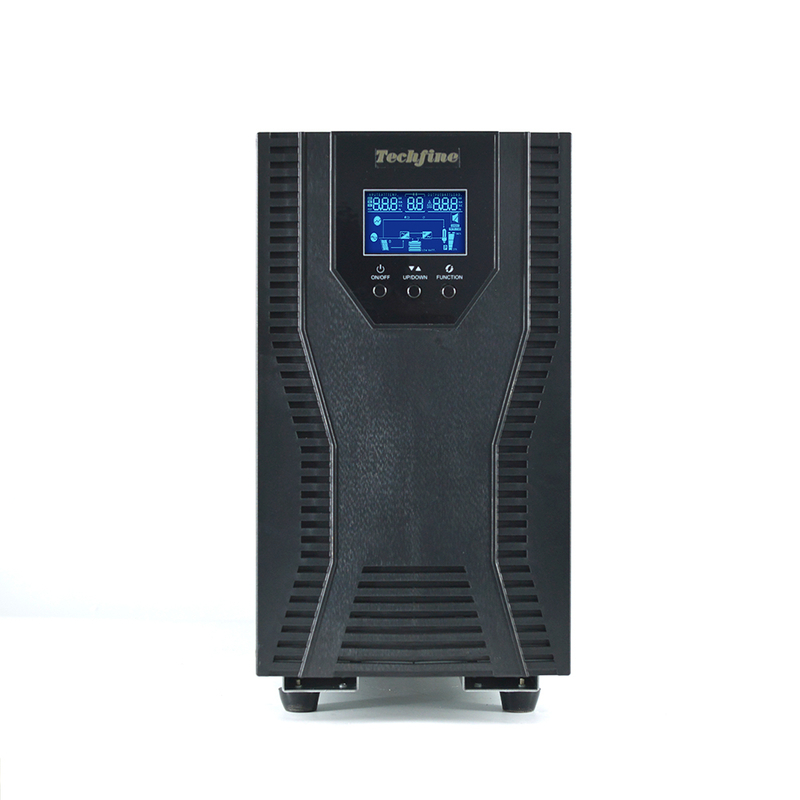
Start with the Techfine UPS directory and identify the intended model family, such as the CYF series. Provide the cold-start need, unattended recovery requirement, load list and expected outage pattern. Ask for the current manual and a description of each supported scenario.
Keep the supplier’s response with the accepted restart policy. Review it if the UPS, battery arrangement or connected equipment changes. Recovery is a system behavior that should remain traceable throughout service.
Frequently asked questions
Is cold start the same as transfer to battery?
No. Starting from an off state without AC input is a different scenario from transferring an already operating UPS.
Will automatic restart turn every computer back on?
Not necessarily. The UPS output and each device’s own recovery policy must work together.
Can I assume a restart delay is adjustable?
No. Confirm the exact feature and configuration options for the selected model.