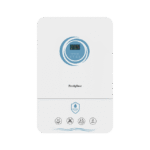
Separate operation without a battery from independent backup, usable solar power and automatic recovery.
A solar inverter that supports operation without a battery can be useful where the initial project does not include storage. However, “battery-free” does not describe a guaranteed backup service. It leaves several questions unanswered: whether the grid must be present, whether a separate backup output is supported, how much solar power is available at that moment and what happens when a cloud passes or a motor starts. Before planning outage operation, turn the headline into a set of model-specific operating conditions. This article provides a practical framework for that discussion.
Begin with four different meanings of operation
Normal grid-connected operation, solar-assisted supply to loads, independent outage operation and restarting after a complete shutdown are different states. A model may support some of them without supporting all of them. An inverter that works without a battery while the grid is healthy should not be assumed to establish an independent supply after the grid fails.
The general principle is illustrated by manufacturer-specific backup products: Fronius documents a designated PV Point function that can supply certain loads from solar power without a battery under stated conditions. That demonstrates why a particular documented feature matters. Its capability, output limits and installation arrangement must not be assigned to Techfine equipment or to another inverter simply because both are described as battery-free.
Ask which power source maintains the output
With no usable battery storage, output cannot be sustained from stored solar energy after sunlight is unavailable. A system may use a healthy utility supply to cover a shortage during normal operation, but that source disappears during a utility outage. The U.S. Department of Energy explains the role of storage in maintaining supply beyond the period of solar production.
For an outage plan, identify the energy source available in each interval. Separate morning startup, strong midday solar production, a sudden cloud event and nighttime. This makes the limitation visible before a customer depends on equipment that may only run during favorable daytime conditions.
| Condition | Question to resolve | What not to assume |
|---|---|---|
| Grid healthy, no battery | Is normal operation explicitly supported? | That support extends to an outage |
| Outage with strong sunlight | Can the model establish its designated independent output? | That every AC terminal remains powered |
| Passing cloud or sudden extra load | How does the output respond to insufficient available PV power? | That panel nameplate watts remain continuously available |
| Nighttime outage | Is another approved energy source included? | That a battery-free PV system contains usable overnight storage |
| Return of sunlight after shutdown | Is restart without grid or battery documented? | That every model can black start automatically |
Use instantaneous power rather than daily energy totals
A daily solar-generation figure describes energy accumulated over time. It does not prove that a load can be supported at every instant. An appliance may need a particular power level at startup or throughout a process, even if its total daily energy use looks small compared with expected solar production.
Consider an illustrative daytime load group using 120 W for communications and 180 W for lighting, for a 300 W running total. If available power at the relevant output falls below that demand, the system needs a documented response or another available source. A larger array may improve the opportunity for supply, but it does not turn variable sunlight into a guaranteed uninterrupted source. The required response must be acceptable to the loads.
For a business task that cannot tolerate interruption, specify the continuity requirement first. Equipment with a compatible UPS or other approved support arrangement may address a separate continuity need, but compatibility and coordination must be confirmed. Do not promise uninterrupted operation merely by combining two products with backup-related labels.
Distinguish a running load from a starting event
Refrigeration, pumps and other motor-driven equipment may impose a starting demand that differs substantially from normal running demand. In a battery-free operating mode, the available energy source and the inverter’s documented overload behavior both need to support that event. A normal-running watt figure is insufficient evidence.
Ask for the actual appliance model and its starting information. Then ask the inverter supplier whether the proposed battery-free mode supports the combination under agreed conditions. Keep the answer connected to the exact model and mode, rather than accepting a demonstration performed with a battery that will not be included in the delivered system.
Read startup and recovery requirements carefully
PV input specifications usually contain more than one relevant limit or operating condition. Startup and sustained operation can have different requirements. A system that runs after being established may behave differently when it must start from a fully de-energized state. The matching manual should explain the supported source arrangement and any required sequence.
For the enquiry, describe whether the customer expects automatic recovery when sunlight returns, whether the grid may remain absent for several days and whether any manual intervention is acceptable. A daytime demonstration performed with a healthy grid does not settle these questions. Record the expected behavior before agreeing that the system meets the outage requirement.
Prepare a model-specific acceptance record
- Identify the exact inverter, firmware and optional equipment.
- Confirm whether the proposed mode permits the battery to be absent.
- List the AC output and loads intended to remain available during an outage.
- Record the documented startup and operating conditions.
- Agree how reduced solar availability, starting events and shutdown are handled.
- Have a qualified provider verify the system’s approved installation and operating arrangement.
- Document how the user recognizes the operating state and responds to an alarm.
Keep electrical isolation, protection and connection work within the approved installation design. The acceptance record is a planning document; it is not a procedure for bypassing protective devices or creating an improvised connection to a building supply.
Frequently asked questions
Will adding more PV panels guarantee battery-free backup?
No. Array design must remain within the inverter’s limits, and solar availability still varies. The model also needs the specific independent-output and startup capabilities required by the application.
Can storage be added later?
Only where the selected model supports the proposed battery arrangement. Confirm voltage, charging functions, current limits and communication requirements before treating future storage as a simple extension.
Where should a buyer start in the Techfine range?
Review the hybrid inverter category and ask for the matching model manual and a written description of battery-free operation. For a broader system comparison, see waveform and load compatibility; output quality remains a separate selection requirement.
Technical references
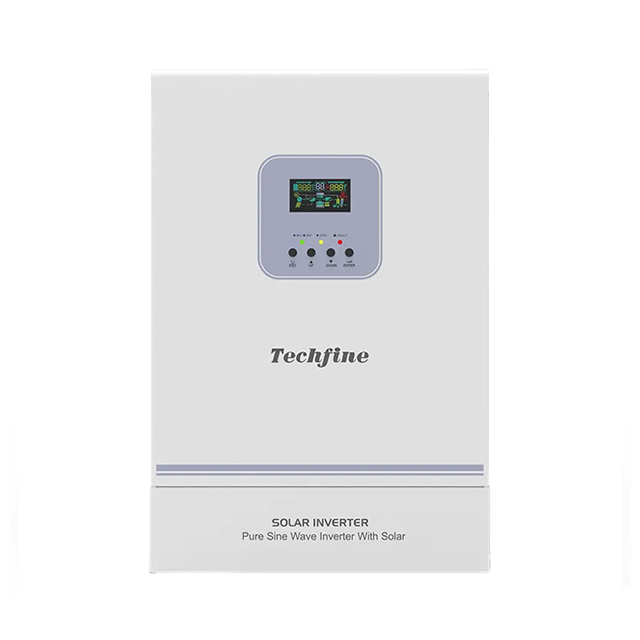
Fronius: a manufacturer-specific battery-free backup example; U.S. DOE: solar and resilience; Techfine model-document download centre. The external example explains a distinction; it does not establish the capabilities of the product in this article’s photograph.