A solar charge controller can show bulk, absorption or float while delivering very different currents during the day. These stage names describe the charging program, not a promise of constant solar production. Understanding the intended transition between stages helps distinguish normal regulation from an incomplete charge, an unsuitable profile or a battery-protection intervention. Begin with the battery manufacturer’s requirements and then check how the selected controller implements them.
Read the stage together with operating conditions
The same current reading has different meanings at different times. Low current near the end of an approved charging cycle may be expected. Low current while a depleted battery requires charging may instead reflect weak sunlight, a charge limit or another constraint. A screenshot containing only an amperage value omits the context needed to interpret it.
Record the controller stage, battery voltage, PV power, configured current limit and relevant battery status at the same timestamp. Add whether other chargers and substantial loads were operating. This compact set of observations is more useful than collecting unrelated photographs from different parts of the day.
Bulk: charging subject to available power and limits
Bulk is commonly the part of the program where the charger attempts to provide available charging current until the next voltage condition is reached. Solar availability, equipment ratings, temperature and battery permission still constrain the result. A controller in bulk cannot deliver its nameplate current when the array cannot supply the required input power.
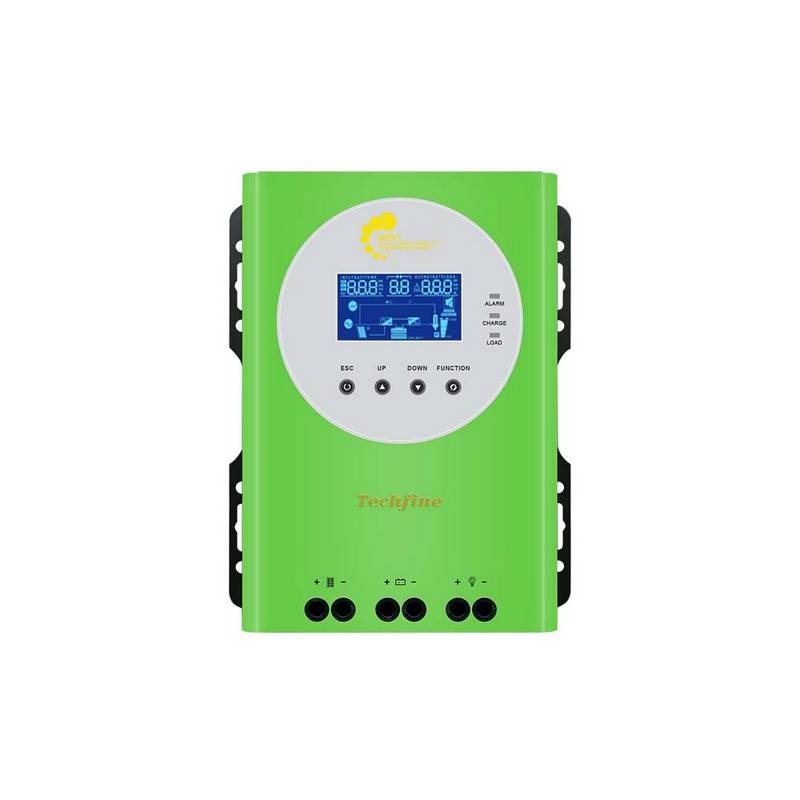
The Techfine M controller family includes several current and voltage versions. Use the supplied model’s manual for the exact charging algorithm. A family description of staged charging does not establish the same thresholds, timing or battery support for every controller carrying a similar enclosure.
Absorption: voltage regulation changes the current story
Absorption usually refers to a constant-voltage portion of an appropriate charging program. The charger regulates toward its configured target while the battery’s acceptance and other limits influence current. The transition therefore changes what the operator should expect to see. A decline in current is not automatically evidence of a failing PV array.
Duration and termination deserve particular attention. Controllers can use timers, adaptive logic, current conditions or combinations of rules. A number copied from a different manufacturer’s menu may have a different meaning. Ask what starts the timer, what pauses it and what ends the stage for the exact battery profile.
Loads complicate interpretation because controller output is not necessarily net battery charging current. If a controller supplies a common DC bus, some output may serve running equipment. An appropriate battery monitor can help separate bus activity from battery current, but only when it is installed and configured to measure the intended boundary.
Float: maintenance behavior, not an energy guarantee
For a lead-acid profile that calls for it, float generally uses a lower maintenance-voltage target after the preceding stage. Reaching this stage indicates that the controller’s transition criteria were met. It does not independently certify battery health or demonstrate that the bank can deliver its original rated capacity.
When loads increase or sunlight falls, the controller may be unable to maintain the target. The return to an earlier stage follows the selected algorithm’s conditions. Frequent transitions should be interpreted alongside load timing and solar availability before anyone changes voltage settings.
Equalization requires explicit battery permission
Equalization is a separate conditioning function associated with particular lead-acid requirements. It must not be enabled merely because it appears in a controller menu. Verify whether the exact battery permits it, the approved parameters and whether connected equipment can tolerate the resulting voltage conditions.
Do not equate lithium cell balancing inside a battery with a lead-acid equalization program in an external charger. These terms concern different functions. Similarly, a generic “sealed” label is insufficient to authorize conditioning of a gel or AGM battery. Where instructions conflict or use ambiguous terminology, obtain written model-specific clarification before configuration.
Use a stage-verification table
| Observed stage | Useful companion evidence | Question to resolve |
|---|---|---|
| Bulk | Available PV power, current limits and battery permission | Is output limited by the source or an operating constraint? |
| Absorption | Target voltage, elapsed time and termination rule | Has the approved completion condition been reached? |
| Float | Load demand and maintenance target | Is the controller maintaining the intended state? |
| Equalization | Explicit battery authorization and complete settings | Is this function permitted for this installation? |
Follow one charging day rather than isolated snapshots
A hypothetical service review starts with the battery partly discharged in the morning. The operator records bulk, increasing PV power and the configured current limit. Later the system reaches the approved voltage target and changes stage. In the afternoon current falls while the stage remains consistent with voltage regulation. This sequence can be normal without any equipment change.
Now consider a different record: the same battery never reaches the target, loads run throughout the available solar window and the bank begins each day at a lower state of charge. The controller may be following its algorithm correctly while the energy budget is inadequate. Raising a voltage target would not create the missing solar energy.
A useful review compares several representative days, including weather and load differences. Keep the existing configuration export before any authorized adjustment, change one justified variable at a time and compare the next observations with the stated objective. This preserves a traceable explanation for the final settings.
Check the meaning of exported history
Monitoring reports sometimes summarize time spent in each stage. Before comparing two reports, establish whether the counters reset daily, accumulate across power interruptions or exclude periods when the charger was disabled. A short absorption entry can have a different explanation from a missing entry, and neither should be interpreted without knowing how the device records its history.
Preserve the original report alongside the review notes. If an owner reports incomplete charging, include the observation period and the specific symptom, such as an unmet runtime requirement or repeated low-battery shutdown. Connecting the stage history to a defined service problem helps the supplier propose a relevant investigation instead of supplying a generic settings list. It also makes the outcome measurable after the agreed correction is applied.
Configuration questions for the supplier
Request the approved battery profile, current ceiling, stage targets, timing rules and any temperature-related adjustments. Clarify how external battery control interacts with the local algorithm. If a BMS withdraws charging permission, the expected response should be documented rather than interpreted as an unexplained failure to reach float.
Must lithium batteries use the same stages?
No universal lead-acid sequence should be imposed on every lithium battery. Use the battery and controller manufacturers’ supported configuration, including any communication-based control and treatment of maintenance charging.
Does float mean the battery is healthy?
It describes a controller operating state. Capacity assessment requires a suitable battery evaluation under defined conditions. Stage indication alone cannot establish retained energy or remaining service life.
Why can current fall on a bright day?
The battery may require less current under voltage regulation, a configured limit may apply or another operating condition may constrain charging. Review the complete synchronized record before attributing the change to the panels.
Further reading: A manufacturer’s example of charging-stage operation; Techfine M controller model specifications. Example algorithms do not replace the supplied equipment’s instructions.