CT-based export limiting and anti-islanding address different grid-connected inverter functions. Export limiting manages power flowing toward the grid at a defined measurement point. Anti-islanding addresses unintended energization when the grid is no longer present. A system can need both, and a statement about one does not prove the other. Keep them separate when reviewing product specifications, quotations and commissioning records.
Define the power-flow requirement first
A project may aim to use solar energy locally while restricting export. Write the permitted export arrangement, the measurement boundary and the equipment involved. The control objective concerns net power at a particular point, not simply whether the inverter produces less power than the building’s average daily consumption. Loads and solar output change throughout the day.
As an illustrative example, a site producing 3 kW while consuming 2 kW has a 1 kW difference before storage and other power flows are considered. An export-control system uses the relevant measurements and controls to manage the actual operating condition. This simple arithmetic does not describe response time, phase behavior or an approved zero-export design.
Understand the role of the CT or meter
A current transformer or compatible meter provides information used by the control system. Its supported type, position, direction and phase association matter. The designer must identify the correct measurement point and the equipment arrangement. A device installed somewhere in the distribution system is not automatically measuring the boundary that the export objective refers to.
Do not infer CT compatibility from a connector or an accessory photograph. Confirm the required sensor, communication arrangement and installation instructions for the exact inverter. A measurement problem can produce a misleading display as well as incorrect control behavior, so configuration and direction need to be verified through an approved commissioning method.
Understand anti-islanding as a separate protection function
Unintentional islanding occurs when a section of an electrical network continues to be energized after separation from the normal grid supply. Anti-islanding functions are intended to address that condition. NREL’s primer on unintentional islanding discusses the subject and inverter-based protection methods. This is different from measuring whether normal grid-connected operation is exporting power.
An inverter that is currently importing a small amount of grid power has not thereby demonstrated its anti-islanding performance. Likewise, the presence of an anti-islanding function does not establish that the product supports the site’s desired export-control mode. Ask for separate technical evidence and applicable model documentation for each requirement.
Compare the functions side by side
| Question | Export limiting | Anti-islanding |
|---|---|---|
| What condition is addressed? | Power flow at the defined grid boundary during relevant operation | Unintended energization of an islanded network |
| What must be identified? | Compatible sensor, control objective and measurement arrangement | Matching protection function and supporting evidence |
| Does it prove backup availability? | No | No; a separate supported backup arrangement is needed |
| Does a catalogue phrase complete site approval? | No | No |
The comparison is functional rather than a claim about legal permission in a particular market. Grid-connection acceptance can depend on the exact product version, installation and local process. Have the responsible designer and relevant utility review the project requirements. Do not treat a general product page as the complete approval package.
Keep backup circuits distinct from the grid interface
A suitable backup system can intentionally supply designated loads after separation from the grid through its approved architecture. That does not mean the public grid connection remains energized. The location and function of the backup output, transfer arrangement and protective devices must be clear in the design.
For procurement, ask two separate questions: what happens at the grid connection during an outage, and what loads can the supported backup output continue to supply? A clear answer should identify the available energy and power limits as well as the electrical separation. Neither CT export control nor a generic hybrid label answers both questions by itself.
Ask about control behavior when information is lost
Export-control performance depends on the approved measurement and control arrangement. Ask the supplier what the inverter does if the measurement signal is unavailable or invalid. Identify any required alarm, control fallback or additional equipment in the design. Avoid assuming that loss of a sensor always produces the same response across product families.
Also establish whether the system controls aggregate power or applies a phase-specific condition. A three-phase site can have unequal loads across phases. The project requirement and the selected system’s capabilities must align. The word “zero export” should lead to a precise technical discussion about the measurement boundary and supported behavior.
Define commissioning evidence before installation
The commissioning plan should confirm the correct sensor and mapping, reported power direction, configured limit and intended response to representative load changes. The responsible qualified team should use the manufacturer’s approved procedures and any project-specific acceptance requirements. This article does not provide instructions to disconnect grid wiring or create an island for testing.
Record the model, firmware, sensor type, settings and results. Keep the grid-interface and backup behavior checks distinguishable in the handover. A screenshot showing zero watts at one instant is useful context, but it is not the same as a completed control-performance record or protection approval.
Review Techfine model evidence separately
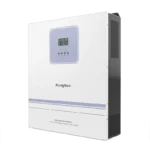
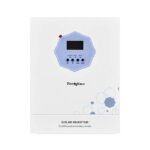
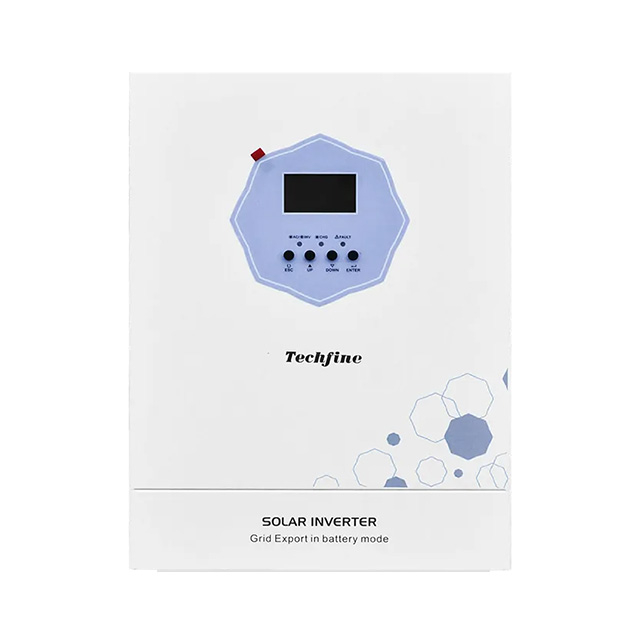
Techfine’s QA series page identifies CT-related export control and BMS communication. Confirm the exact model’s supported sensor arrangement and control functionality with the supplier. Review grid-protection and market documentation independently rather than reading the export-control description as proof of every grid-related requirement.
Use the QA product page as the product reference in the enquiry. Provide the supply arrangement, site load profile, export requirement, battery plan and intended backup circuits. Ask for the current manual and relevant model-specific evidence. The answer should describe the proposed system rather than repeat a short marketing feature list.
Manage changes after handover
A new inverter, a changed meter location or additional generation can change the original control arrangement. Keep the boundary diagram and settings with the equipment records, and require a review when the system changes. A sensor that was appropriate for the original topology may no longer describe all relevant power flows after expansion.
Make responsibility clear for monitoring alarms and maintaining the measurement equipment. Export limiting is an operating function within a complete installation. Maintaining its intended behavior requires preserving the approved configuration, not merely leaving a feature enabled in an application menu.
Frequently asked questions
Does zero-export capability mean grid connection is automatically approved?
No. The exact equipment and installation must satisfy the applicable connection process and project requirements. Obtain the necessary model-specific confirmation.
Can export limiting replace anti-islanding?
No. They address different conditions. Review and verify both requirements separately.
Will an inverter with anti-islanding always stop every backup load?
Backup behavior depends on the supported architecture. A properly designed system may supply designated isolated loads while meeting its grid-interface requirements.